If you are asking why your water pressure is low, the cause is usually something blocking or restricting the flow: a clogged aerator, a partly closed valve, a softener, old pipe, a leak, or a problem on the City’s side. The fastest way to narrow it down is to find out whether one fixture is affected or the whole house.
The City of Calgary’s own water pressure page lists the common causes and the first checks, and we have used it as the backbone of this guide.
- One fixture low: start with the aerator or the valve under the sink.
- Whole house low: check the main shut-off valve is fully open, then look for leaks or City work.
- Only hot water low: the City says to call a plumber.
- Never adjust a pressure-reducing valve or water heater parts yourself.
- Questions about the City’s supply: call 311.
In this article
What counts as low water pressure?
There is no single number that applies to every home. A plumbing instructor writing in the trade magazine Mechanical Business (May 2024) says most homes have about 60 to 65 psi. He cites the National Plumbing Code as setting a maximum of 80 psi (550 kPa) for single-family homes and a minimum of 200 kPa, or 28 psi, at the entry to the building.
That 28 psi minimum is the lowest the code allows, and the author notes a home at that level would feel inadequate. He describes checking pressure by attaching a 0 to 100 psi gauge to an outdoor hose bib. If you want to know your actual number, a plumber can measure it for you.
The City of Calgary does not publish a single “normal” range on its pressure page. It does note that homes built after 1990 in areas over 80 psi have a pressure-reducing valve, which keeps house plumbing from being over-pressured.
Is it one fixture or the whole house?
This is the most useful question to answer first. Turn on the cold tap in a few places: a kitchen sink, a bathroom sink, a shower, and an outdoor tap.
- One fixture is weak, the rest are fine. The problem is probably local to that fixture or its own shut-off valve.
- Every cold tap is weak. The cause is probably upstream of your fixtures: the main shut-off valve, a restriction in the pipes, a leak, a softener, or the supply itself.
- Only the hot water is weak. The City says to call a plumber for hot-water-only pressure problems.
Our reading is that this three-way sort is a triage step, not a diagnosis. It points you at the right section below.
What are the common causes of low water pressure?
Causes you can check safely
A clogged aerator. The City lists debris clogging a faucet aerator as a cause of low pressure. It says to unscrew the aerator, remove the screen and soak it in vinegar for 10 to 15 minutes. If the vinegar fizzes, the City says carbonate from naturally occurring minerals is present and harmless.
Calgary’s water is hard. The City’s water hardness page says hard water can cause a build-up of minerals on taps and other fixtures, which fits with aerators and showerheads clogging over time.
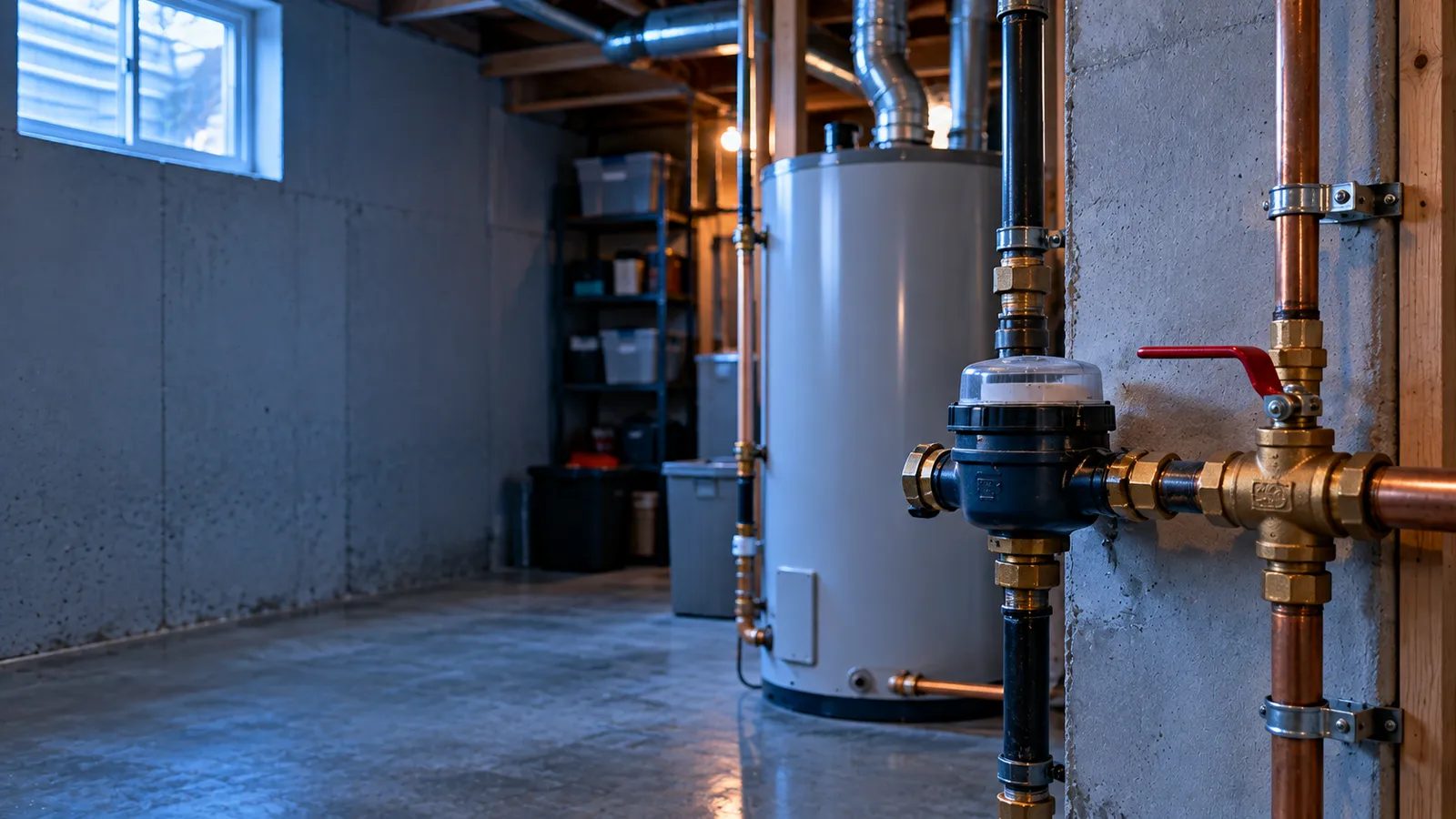
A valve that is not fully open. The City lists a main shut-off valve or an under-sink shut-off valve that is not fully open. It says the main valve is usually near the water tank in the basement or below the water meter. The plumbing instructor in Mechanical Business says this is rare but does happen.
Causes that usually need a plumber
A water softener restricting cold-water flow. The City says that if cold-water pressure is low, you can bypass the softener, and that if pressure improves, a plumber is needed. If you are weighing a softener, see our evidence-led take on whether a water softener is worth it in Calgary.
Hot-water-side problems. The Mechanical Business author says calcium build-up on the bottom of a hot water tank can contribute to pressure complaints, and that draining a neglected tank is often a waste of time if it has not been done every year. This is work for a licensed plumber.
Old or clogged pipes. The same author says that in a very old house with galvanized water lines, the lines may be plugged with rust and need replacing. Our services page lists improved water pressure among the reasons to replace failing Poly-B piping. For more on that material, read whether Poly-B plumbing is a problem in Calgary.
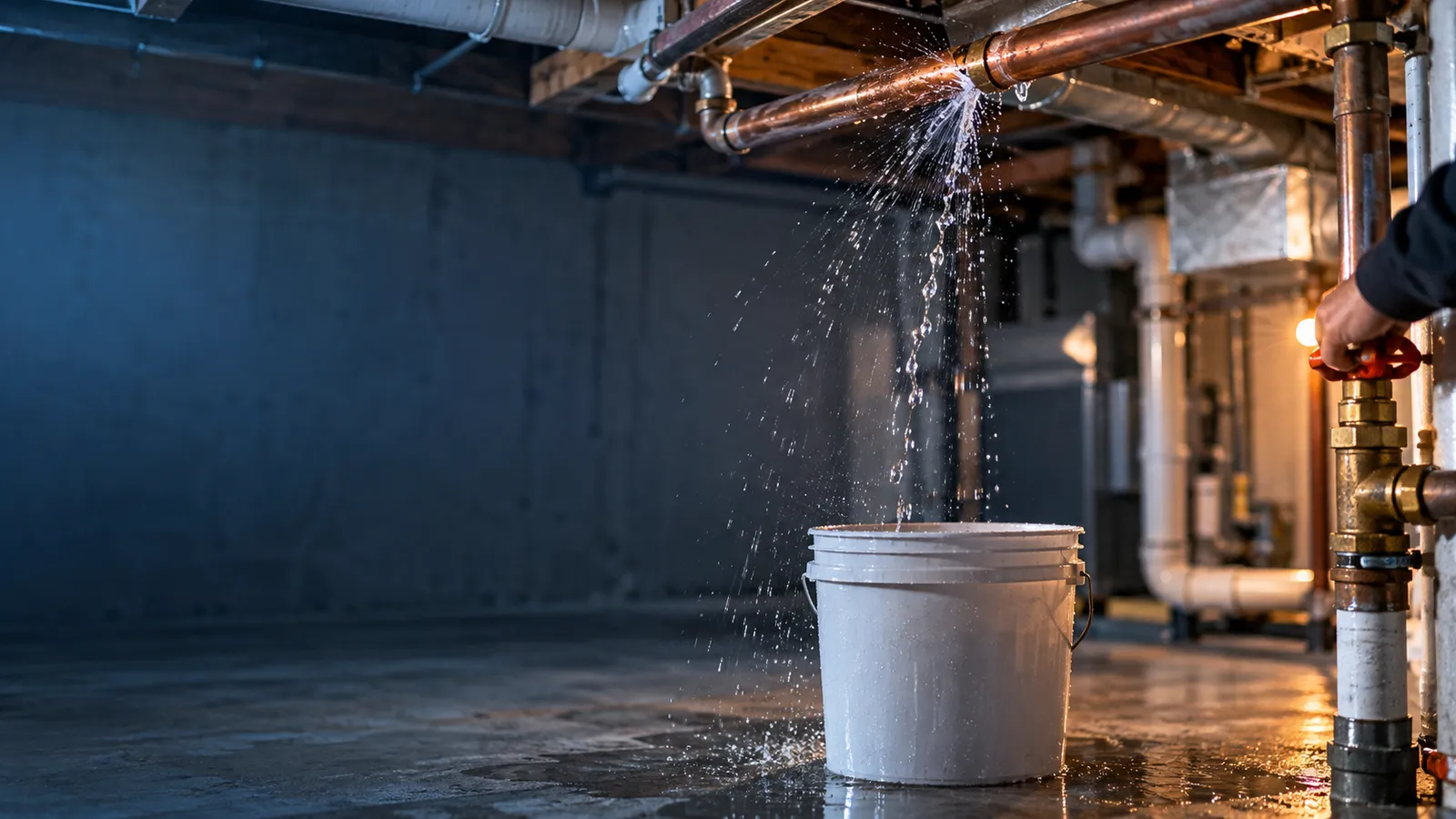
A leak. The Mechanical Business author says a leak under or outside the house can be behind a pressure complaint. The City says a drop in water pressure may indicate a leak in the water service outside the building. Leaks get worse and cost more over time, so do not wait on this one.
The pressure-reducing valve. The City says a pressure-reducing valve more than five years old may need service, though it raises this in the context of high pressure. We mention it so you know the valve exists. Checking or replacing it is a plumber’s job.
Causes on the City’s side
The City lists several supply-side causes: nearby water main work, a fire hydrant in use, and leaks in an active irrigation system. It also lists frozen water lines, noting a gradual pressure drop in winter can be a sign. Look for a City notice or crews nearby, and ask a neighbour whether they have the same problem. If you suspect a frozen line, see how to thaw a frozen pipe safely.
What should you check first?
Work through these in order. Each step is safe for most homeowners, and each one rules something out.
- Look for a City notice, nearby crews or a hydrant in use. If you see one, the cause may not be in your house.
- Compare fixtures. Note whether one fixture, many fixtures or only hot water is affected.
- Check the main shut-off valve. Confirm it is fully open. Do not force a stiff valve. If you cannot find it, our guide to finding your main water shut-off valve can help.
- Check the shut-off valves under the affected sink. The City lists these as a possible cause.
- Clean the aerator. Follow the City’s vinegar-soak steps above.
- Look around for signs of a leak. Check for damp patches, stains, the sound of running water when everything is off, and wet areas near appliances.
- Check irrigation. The City lists irrigation leaks and trapped air after spring start-up as causes.
If steps like these do not explain it, stop. More digging inside walls, near gas appliances or at the regulator is the point where a licensed plumber should take over.
When should you call a plumber?
Call a licensed plumber if:
- the whole house is affected and the main valve is fully open;
- only your hot water has low pressure;
- you find or suspect a leak;
- low pressure started right after a softener, heater or pipe change;
- you have older galvanized or Poly-B piping and pressure has declined; or
- the quick checks above did not help.
For plumbing in Calgary, H2O Expert Plumbing describes a three-step approach on its plumbing services page: book, diagnose, then quote and complete. The diagnose step is described as inspecting the problem, explaining findings in plain language and outlining repair or replacement options. You approve a written quote before work starts.
Is it your pipes or the City’s?
Ownership matters because it decides who fixes and who pays. The City’s water service lines page says the section from the water main to the property line is owned and maintained by the City, and the section from the property line to the house belongs to the homeowner. It also says repair costs on the private portion fall to the property owner, except for the water meter.
If neighbours have the same low pressure, or you see no sign of a problem inside, the City says to call 311 or submit an online 311 request. Say what you have already checked, so the person you speak to knows where to start.
Next step
If your checks did not solve it, or you suspect a leak, book a diagnosis. We provide plumbing in Calgary and surrounding communities, and we are available 7 days a week.
Get a Free Quote → or call +1 (403) 700-4443. To learn more about who we are, visit our about page.
Frequently asked questions
What is normal water pressure in a house?
A plumbing instructor writing in Mechanical Business says most homes have about 60 to 65 psi. The National Plumbing Code, as he cites it, sets a maximum of 80 psi and a minimum of 28 psi at the building entry. A plumber can measure your actual pressure.
Why is my water pressure low only on the hot side?
The City of Calgary says to call a plumber if only the hot water has a pressure problem. A plumbing instructor writing in Mechanical Business adds that mineral build-up in a hot water tank can be involved. Do not work on gas or electric water heater components yourself.
Can hard water cause low water pressure?
It can contribute at fixtures. The City of Calgary says hard water can cause mineral build-up on taps and other fixtures, and lists a clogged aerator as a cause of low pressure. Cleaning the aerator in vinegar for 10 to 15 minutes is the City’s suggested first step.
Should I call the City or a plumber about low water pressure?
Start by checking whether neighbours are affected and whether the City has work nearby. For questions about the City’s supply, call 311. For problems inside your home, such as hot-water-only issues, leaks or a whole-house drop with the main valve open, call a licensed plumber.
Can I adjust my water pressure myself?
We do not recommend it. Pressure-reducing valves protect your plumbing from over-pressure, and the plumbing instructor in Mechanical Business notes that code limits apply. Adjusting or replacing a regulator is a job for a licensed plumber, who can measure the pressure first.