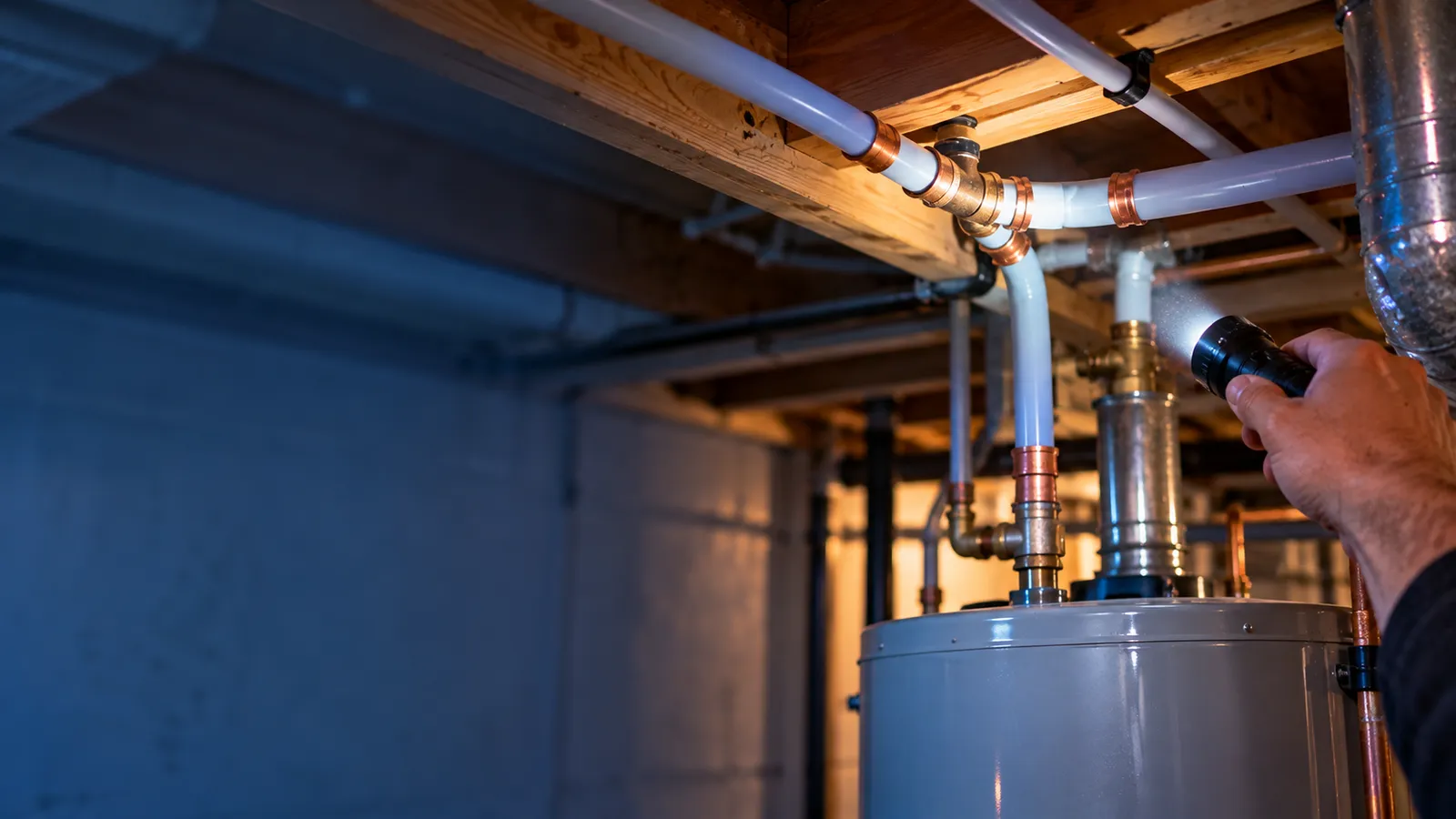
Poly-B (polybutylene) is a grey plastic water pipe that was introduced to Alberta construction in the mid-1970s, with production stopping in 1998. Whether it is a problem in your house depends on how it was installed, what fittings it uses and what condition it is in. Having it does not mean a failure is coming, and not having seen a leak does not mean the pipe is fine. The only way to know is to identify it and have a licensed plumber assess it.
- The Government of Alberta says Poly-B was introduced to Alberta construction in the mid-1970s and that manufacturers stopped producing it in 1998.
- Alberta also says Poly-B is no longer listed in the current plumbing codes, but that codes are not retroactive.
- You can often spot it by its light grey colour and printed markings, but a plumber should confirm.
- Replacing water lines in a Calgary home needs a plumbing permit.
In this article
What is Poly-B plumbing?
Poly-B is short for polybutylene, a flexible plastic used for pressurized household water lines. Alberta’s government describes it as flexible plastic piping with a light grey colour. It was tested and certified by the Canadian Standards Association and was intended for both hot and cold water.
The fittings matter as much as the pipe. We come back to that below, because the government’s own guidance singles out one kind of fitting as more susceptible to failure.
Which Calgary homes can have it?
The short version: homes built or renovated roughly between the mid-1970s and the late 1990s.
Alberta’s fact sheet says Poly-B would not be in your home if it was built before 1975 and no plumbing renovations have since been carried out. It also says manufacturers stopped producing it in 1998. The government’s earlier fact sheet adds that unconfirmed estimates put about 148,000 Alberta homes on Poly-B water systems.
Different sources give slightly different year windows. The FAQ on our own services page says roughly 1978 to 1995. The Government of Alberta says mid-1970s and production ending in 1998. Treat the year as a clue, not an answer. Renovations change the picture in both directions.
Alberta’s wording also tells you that renovations matter: a home built before 1975 can contain Poly-B if it was re-plumbed later.
How can you tell if you have Poly-B?
You can check for it without opening a wall, but a visual check is not an inspection. A resource site on Poly-B suggests looking at three things on an exposed supply pipe: the tube, its printed markings and the joints.
- The printing. Alberta says Poly-B carries continuous permanent markings that include pipe size, manufacturer, date code, material, pressure rating, certifying agency and construction standard, for example CSA-B137.8. Look for “PB2110”, “polybutylene” or “CSA B137.8”. The resource site notes that faded or missing print does not rule it out.
- The colour. Alberta describes it as light grey. The resource site cautions that colour is only a clue because Poly-B was also made in other colours, and other plastics share them.
- The fittings. Alberta’s fact sheet says the Poly-B installed in the province primarily used copper or brass metal insert fittings and soft copper crimping rings, and that plastic insert fittings (with aluminum or copper bands) are the ones reported to be more susceptible to failure. The resource site says PEX rings are often black-oxide coated and may be stamped “PEX”.
Where to look: the pipe leaving the main shut-off, the connections at the hot water tank, under sinks, behind toilets, the laundry area and basement ceilings. The resource site also lists a few look-alikes to rule out, including PEX, CPVC and a layered aluminum-core pipe that is often orange and blue.
If you are not sure, photograph the printing and the fittings. For an insurance or sale question, the resource site recommends having a plumber or home inspector confirm what you found in person.
Is Poly-B actually a problem?
It can be. The picture is not black and white, and anyone who tells you otherwise is overselling.
What the official sources say. Alberta’s fact sheet says failures of Poly-B installations in Canada and the United States led to class action lawsuits. It says the plastic-insert fittings with aluminum bands are the ones reported to be more susceptible to failure and leaks. It also says Poly-B in Alberta mostly used metal insert fittings and copper crimp rings. The Alberta documents we read do not say that every Poly-B system will fail.
What the code says. Alberta’s fact sheet says Poly-B is no longer listed as an acceptable plumbing piping material in the National Plumbing Code of Canada 2005, but that previously acceptable products remain acceptable if they do not pose a health or safety hazard. The 2016 safety tips repeat that it is not in the current codes and that codes are not retroactive. In plain terms, the government sources we read do not say you must replace it, but it is no longer a listed material for new work.
What a plumber sees. Our services page says Poly-B degrades over time and is prone to cracking and leaking, and that we replace it with PEX or copper. A visual check cannot show hidden piping or its internal condition, which is why an assessment matters. We did not find a Government of Alberta statement putting a lifespan on the pipe, so we will not invent one.
The honest middle. Poly-B is an older material with a documented history of failures, in a province where the fittings used were the more reliable kind. That makes it worth taking seriously and worth having assessed. It does not make panic or an immediate full repipe the only reasonable response.
Note on a common claim: you may hear that insurers all demand Poly-B be replaced. We have not verified that for Calgary, and we are not repeating it. Insurer rules differ by company and policy.
What does a Poly-B failure look like?
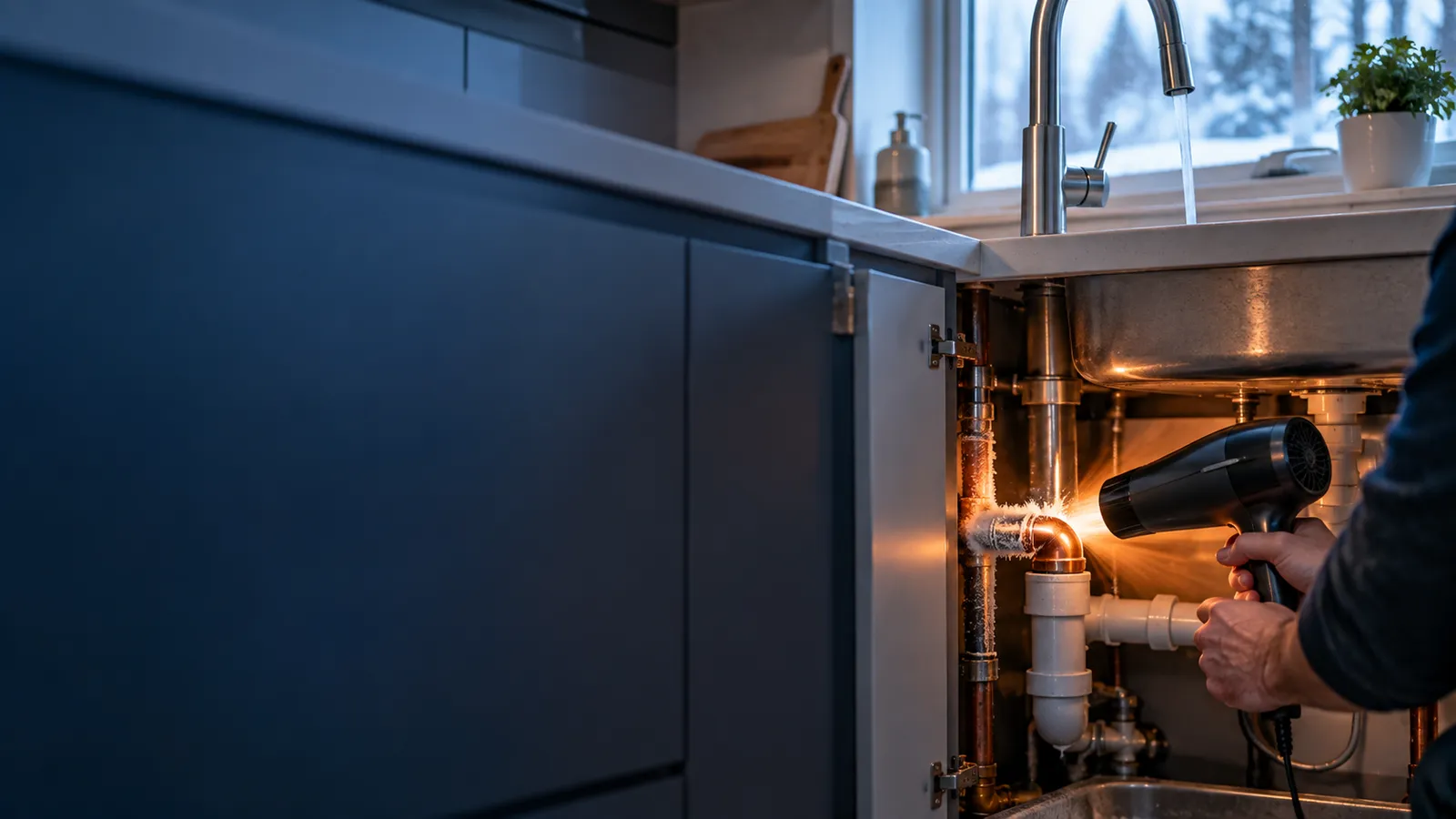
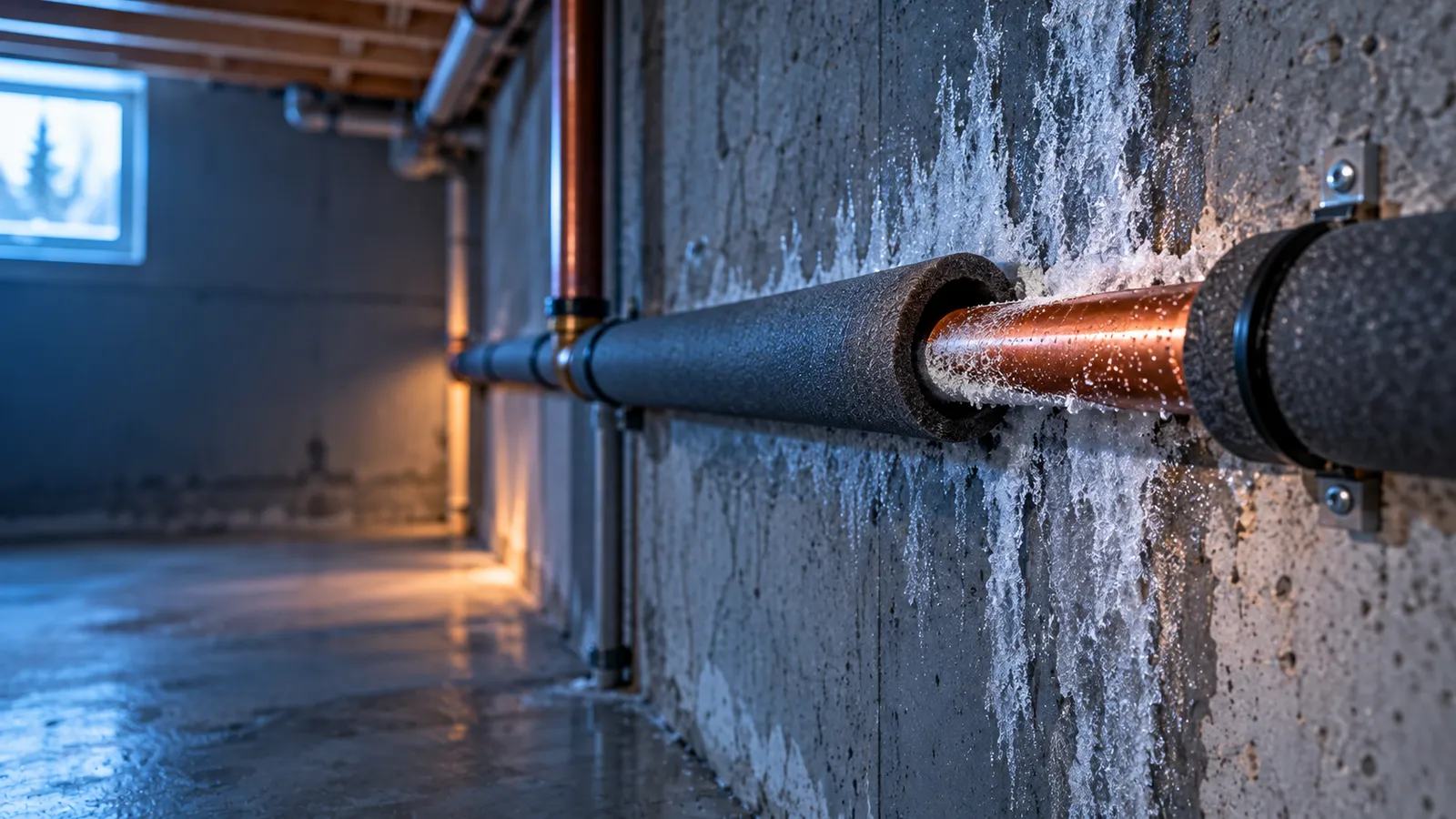
Poly-B has no special warning sign. What you notice is a leak, and our plumbing services page describes the effects: moisture spreading into flooring and drywall, and damp materials where mould can take hold. As general guidance, treat any damp or stained patch near a pipe run, or water pooling near the hot water tank connections, as a reason to find the source. None of those proves Poly-B is the cause. If water is escaping, close the interior main shut-off valve and call a licensed plumber. Our guide to what to do when a pipe bursts covers the first fifteen minutes, and a slow pressure drop is covered in why your water pressure may be low.
What are your options if you have it?
You have three broad choices, and the right one depends on the assessment, not the material alone.
- Leave it and monitor. Whether that is reasonable depends on what a plumber finds in the pipe and fittings. Keep a record of what you found and when.
- Repair a specific leak. The City of Calgary says a plumbing permit is not needed to repair a leak in a water distribution or drainage system. A repair is a patch on an older system, though, and a plumber can tell you what that means for the rest of the line.
- Replace it. H2O Expert Plumbing’s Poly-B Waterline Remediation service replaces failing Poly-B with PEX or copper, as listed on our plumbing, gas and heating services page.
Permits. The City is clear that a plumbing permit is required when a plumbing system is constructed, extended or altered, and that this includes replacing water and sewer lines in or around the home. The City’s homeowner permit is only for owners who live in the home and do the work themselves, and it cannot be pulled on behalf of the person or company doing the work. Our site says H2O Expert Plumbing handles required plumbing and gas permits and arranges inspections.
What should you ask your insurer, your inspector and your plumber?
Instead of guessing what an insurer wants, ask. These are questions to put in writing, not claims we are making.
Ask your insurer: - Does my policy treat Poly-B differently, and in what way? - If I replace it, what documentation do you need? - Does that change my premium or my coverage for water damage?
Ask a home inspector or plumber: - Is the pipe in my home Poly-B, and which type of fittings does it have? - What condition are the pipe and fittings in, in the places you can see? - Which areas can you not see, and how would we check them? - If I replace it, will it be PEX or copper, and what is the plan for walls and finishes?
If you are selling or buying: a plumber’s written report on what was found is useful paperwork. Do not rely on a description in a listing.
For the money side, see our guide on what plumbers charge in Calgary. We do not quote a Poly-B price in an article, because the scope of work varies too much from house to house.
Next step
If you suspect you have Poly-B, the useful next step is a proper look. H2O Expert Plumbing has been serving Calgary homeowners since 2012 (see about our licensed Calgary plumbers), and our team is available 7 days a week. You can get a free quote or call +1 (403) 700-4443. Our process is three steps: book, diagnose, then a written quote before work starts. See also our plumbing services in Calgary.
Frequently asked questions
What is Poly-B plumbing?
Poly-B is polybutylene, a flexible, usually light grey plastic pipe used for pressurized water lines. The Government of Alberta says it was introduced to Alberta construction in the mid-1970s and that production stopped in 1998. It remains in many older homes, where it can sit alongside newer materials after renovations.
How do I know if my home has Poly-B?
Look at exposed supply pipes near the main shut-off, the hot water tank and under sinks. Poly-B is usually light grey and carries printed markings such as PB2110 or CSA B137.8. Colour alone is not proof, and a visual check is not an inspection. A plumber or home inspector should confirm what you find.
Is Poly-B still allowed in new plumbing in Alberta?
No. The Government of Alberta’s fact sheet says Poly-B is no longer listed as an acceptable piping material in the National Plumbing Code of Canada 2005. It also says codes are not retroactive, so existing installations are not automatically affected as long as the product does not pose a health or safety hazard.
Do I need a permit to replace Poly-B in Calgary?
The City of Calgary says a plumbing permit is required when a plumbing system is constructed, extended or altered, and that this includes replacing water and sewer lines. Repairing a leak does not need one. Homeowner permits have eligibility rules, so ask your plumber or the City how your job is handled.
Does my insurer require me to replace Poly-B?
That depends on your insurer and your policy, and we have not verified a Calgary-wide rule. Ask your insurer directly, preferably in writing, how it treats Poly-B and what documentation it would want if you replace it. A plumber’s written report on the pipe and its condition is a useful thing to have.
Sources
- Government of Alberta, Safety tips: Polybutylene (Poly-B) pressure water piping (last updated/reviewed August 2016)
- Government of Alberta (Municipal Affairs), Fact sheet: Polybutylene (Poly-B) pressure water piping (January 6, 2012)
- Polybutylene.ca, How to identify polybutylene (Poly-B) pipes (industry resource site, updated 2026-09-29)
- City of Calgary, Service valves
- City of Calgary, Homeowner electrical and plumbing permits