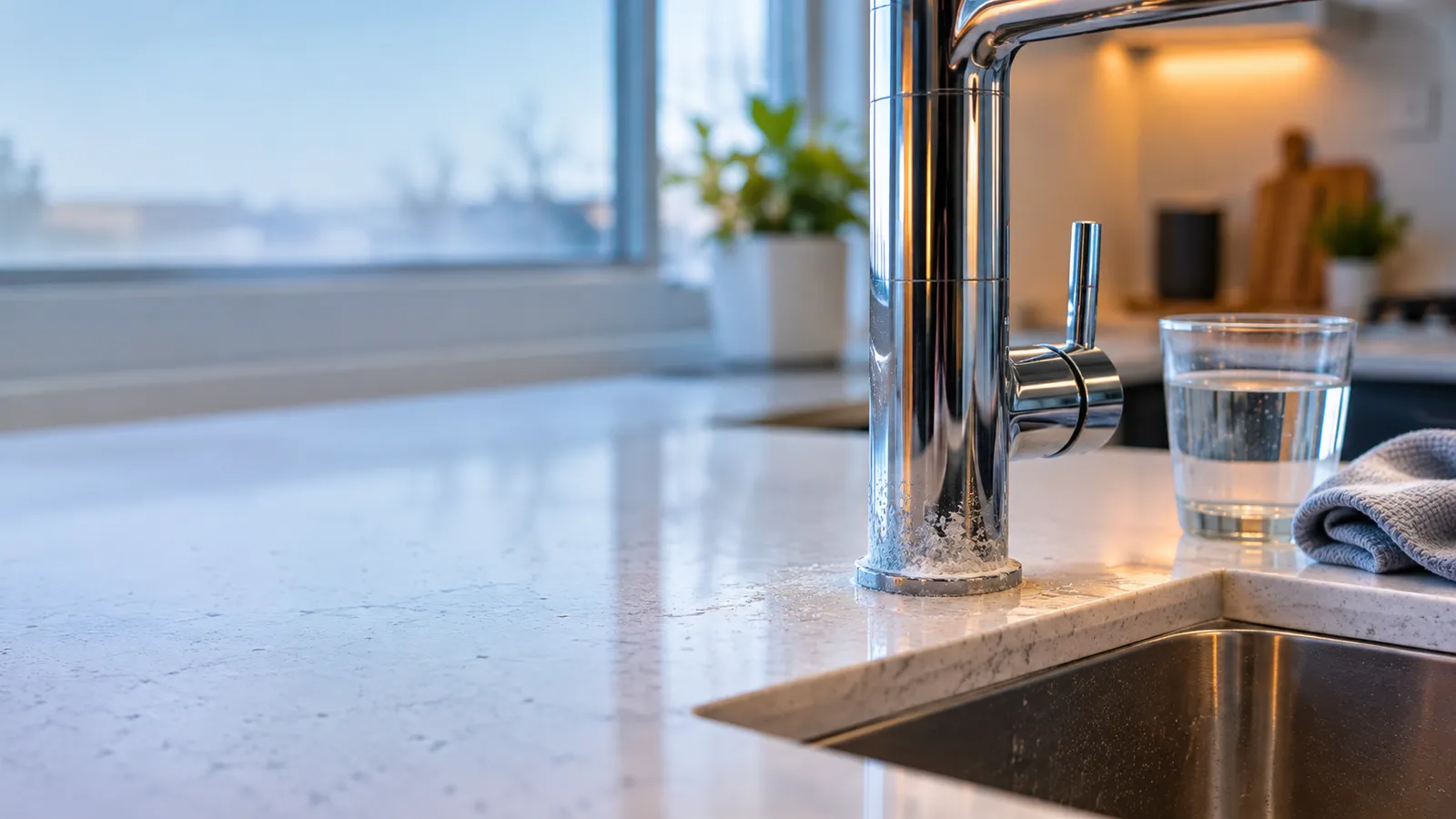
Is a water softener worth it in Calgary? For some households, yes, and for most it is not a must. Calgary’s tap water is hard, but the City says there are no known health effects from the calcium and magnesium that make it hard. The case for a softener is about scale, soap and comfort, not safety.
Softening also adds sodium, which matters for some people.
A disclosure first: H2O Expert Plumbing installs water softeners, so we would benefit if you bought one. We have tried to argue from government sources instead of sales claims, and we describe the case against a softener as fairly as we can below. This is general information, and your home and household are different.
- Calgary’s water is hard: the City reports 141 to 274 mg/L of hardness across 2025.
- The City says there are no known health effects from calcium and magnesium in drinking water.
- Health Canada calls softeners the best available technology for reducing hardness, but says they increase sodium.
- Children under 8 should generally not drink softened water, per Health Canada, and kitchen-tap bypass is a common safeguard.
- A softener can be worth it if scale bothers you, and not worth it if it does not.
In this article
How hard is Calgary’s water?
Hard, but not extreme. The City of Calgary’s water hardness page says the water is considered hard because of its calcium and magnesium, which come from rock such as limestone dissolving in the river system.
The City publishes measured values in mg/L as calcium carbonate. Over 2025, the Bearspaw plant (Bow River, serving mostly the north) ran from about 141 to 200, and the Glenmore plant (Elbow River, serving mostly the south) from about 181 to 274. The full-year range was 141 to 274. Hardness is lowest during spring snowmelt and highest from December to February.
For context, Health Canada describes hardness classes in which 100 to 150 mg/L is medium hard, 150 to 300 is hard and above 300 is very hard. On that scale, Calgary sits mostly in the hard band. Health Canada also says supplies above 200 mg/L are considered poor but have been tolerated by consumers, and that levels above 500 are unacceptable for many domestic purposes and may require softening. Calgary is well below that last line.
Which side of the city you live on matters. A home served mainly from Glenmore will see higher numbers than one served mainly from Bearspaw.
What does hard water actually do?
The City lists two effects: hard water can make it difficult to lather soap, and it can cause a build-up of minerals on taps and other fixtures. Both are real but they are about comfort and cleaning, not health. The City states that there are no known health effects associated with calcium and magnesium minerals in drinking water.
Health Canada adds a plumbing point. Hardness ions can come out of the water and form scale on the inside of hot-water pipes and water heating appliances, and hard water can clog household pipes and increase soap use.
That wording covers water heating appliances, which includes a hot water tank. We did not find a sourced figure for how much scale shortens a tank’s life in a given home, so we will not put a number on it. If you want to understand how long tanks last in general, see our guide to hot water tank lifespan.
There is also an operational side effect worth knowing. The City lists a water softener restricting cold-water flow as one cause of low water pressure. See why your water pressure may be low for how to check.
Who benefits most from a water softener?
Based on what the sources describe, a softener is most likely to be worth it if one or more of these is true:
- Scale and spotting bother you. If you are scrubbing mineral build-up off faucets, showerheads and glass regularly, softening addresses the cause. Health Canada calls softeners “the best available technology for the overall reduction of hardness, calcium and magnesium.”
- You want to reduce scale in hot-water equipment. Health Canada describes scale forming in hot-water pipes and water heating appliances. A softener reduces the minerals that cause it.
- You live where the water runs hardest. Households fed mainly from the Glenmore plant, and everyone in winter, see higher hardness.
- You are planning a long-term home, not a short stay. This is our reasoning, not a sourced claim: equipment and upkeep costs are easier to justify over many years.
If none of these describes you, the case is weaker.
Who should think twice?
A softener has real trade-offs, and some of them come directly from the government sources we read.
Sodium. Health Canada says residential water softening systems increase the concentration of sodium in the treated water. The City says conventional salt-based softeners may not be suitable for people on sodium-reduced diets. The City reports 3.4 to 12 mg/L of sodium in Calgary’s supply, against an aesthetic objective of 200 mg/L or less, so the sodium a softener adds is something you are choosing to introduce.
Young children. Health Canada says children under 8 should generally not drink softened water, because they may exceed the upper limit for sodium intake.
Potassium is not a free fix. Health Canada also notes that softening with potassium may introduce undesirable levels of potassium, which may matter for certain groups. If someone in your household has a medical reason to watch sodium or potassium, ask a health professional before you buy.
A bypass for drinking and cooking water. Health Canada says a portion of the most-used water, such as the kitchen tap, should bypass the softener to avoid excessive sodium or potassium intake. Ask any installer how this would work in your home.
You may not need it. If hard water is a minor irritation and you are content to clean fixtures, you can skip it. That is a legitimate choice.
What about reverse osmosis and drinking-water filters?
They solve a different problem. A softener treats water for the whole house (or part of it) to cut hardness. A reverse osmosis (RO) system is sold as a drinking-water treatment system.
Health Canada’s page on treatment devices says RO systems remove minerals such as calcium and magnesium from drinking water, and that in Canada water is a minor source of those minerals compared with food. That is not a reason to avoid RO, but it does mean RO is not a “hardness fix” for your hot-water system.
Our reading, which is an inference from the sources above: a household that mainly wants better-tasting or lower-sodium drinking water may prefer an RO tap, while one that mainly wants less scale on fixtures and in the water heater is describing a softener’s job. Some households use both.
Whichever you choose, Health Canada strongly recommends buying a device certified to the applicable NSF/ANSI standard. It lists Standard 44 for cation exchange water softeners and Standard 58 for reverse osmosis systems, and says to follow the maintenance instructions included with the device. We have not assessed other types of conditioner in this article.
What is the best argument against our view?
The strongest case for “just buy one” runs like this: hard water is a constant, scale builds up whether or not you notice it, and a softener is the proven technology for reducing hardness. Health Canada does describe softeners that way. If you own your home for a long time, the argument goes, preventing scale is cheaper than dealing with it.
That is a fair argument, and it is why we say “worth it for some,” not “never.” Where we differ is the word “constant.” The City reports hardness that sits in the hard band rather than the very hard band on Health Canada’s scale, with no known health effect, and the benefit depends heavily on your own symptoms: how much scale you see, how your fixtures and tank are doing, and whether anyone in the household has sodium concerns. A reasonable person can look at the same facts and decide not to buy.
The other argument runs the opposite way: softeners add sodium and need upkeep, so skip them. That overstates the case. Health Canada’s kitchen-tap bypass suggestion is aimed at exactly the sodium concern, and upkeep is a cost to weigh rather than a deal-breaker.
What should you ask before buying one?
Whether you buy from us or anyone else, these questions protect you:
- What problem is this solving in my home? Ask the installer to point to the scale, not just describe hard water in general.
- Is the unit certified to NSF/ANSI Standard 44? Ask to see the certification mark.
- How will drinking and cooking water bypass the softener? This addresses the sodium points above.
- What are the ongoing costs and maintenance? Ask for a written, itemized quote. Alberta.ca advises getting written estimates from more than one business. We did not find sourced Calgary price figures for softeners, so we will not quote one.
- What happens to my water pressure? The City lists softeners as a possible cause of low cold-water pressure.
Next step
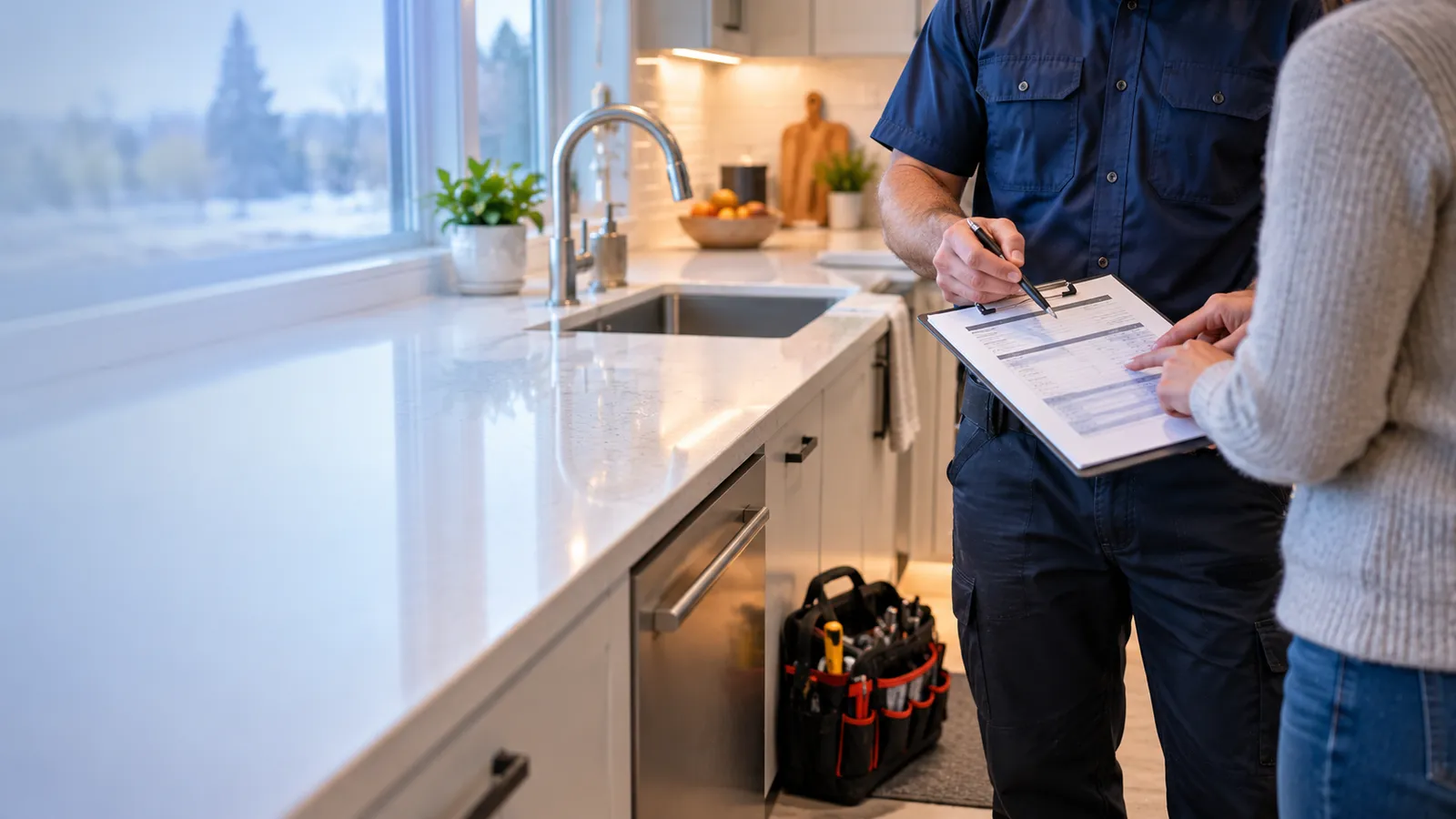
If you are weighing a softener, start with a written quote that names the problem it solves in your home. Our services page lists water softener, reverse osmosis, faucet, toilet and bidet installs, and our plumbing page describes how we book, diagnose, quote and complete a job. You approve the quote before any work starts.
Get a Free Quote → or call +1 (403) 700-4443. To see who is behind these answers, visit our about page.
Frequently asked questions
Is Calgary water hard?
Yes. The City of Calgary says its water is considered hard because of calcium and magnesium. Its 2025 measurements ranged from 141 to 274 mg/L as calcium carbonate, lowest during spring snowmelt and highest from December to February. The City says there are no known health effects from these minerals.
Is hard water bad for you?
The City of Calgary says there are no known health effects associated with calcium and magnesium minerals in drinking water. Hard water can make soap harder to lather and leave mineral build-up on taps and fixtures. Those are comfort and cleaning issues, not health issues.
Does a water softener make water unsafe to drink?
Not necessarily, but it adds sodium. Health Canada says softened water has more sodium and that children under 8 should generally not drink it. It advises letting a portion of the most-used water, such as the kitchen tap, bypass the softener. Ask a health professional if you have dietary concerns.
Is reverse osmosis better than a water softener?
They do different jobs. A softener reduces hardness for the plumbing it serves, while reverse osmosis is a drinking-water treatment that removes minerals such as calcium and magnesium, per Health Canada. Which is better depends on what you want to fix, and some homes use both.
Can a water softener cause low water pressure?
It can. The City of Calgary lists a water softener restricting cold-water flow as a possible cause of low pressure and says to bypass it to test. If pressure improves with the softener bypassed, the City says a plumber is needed.