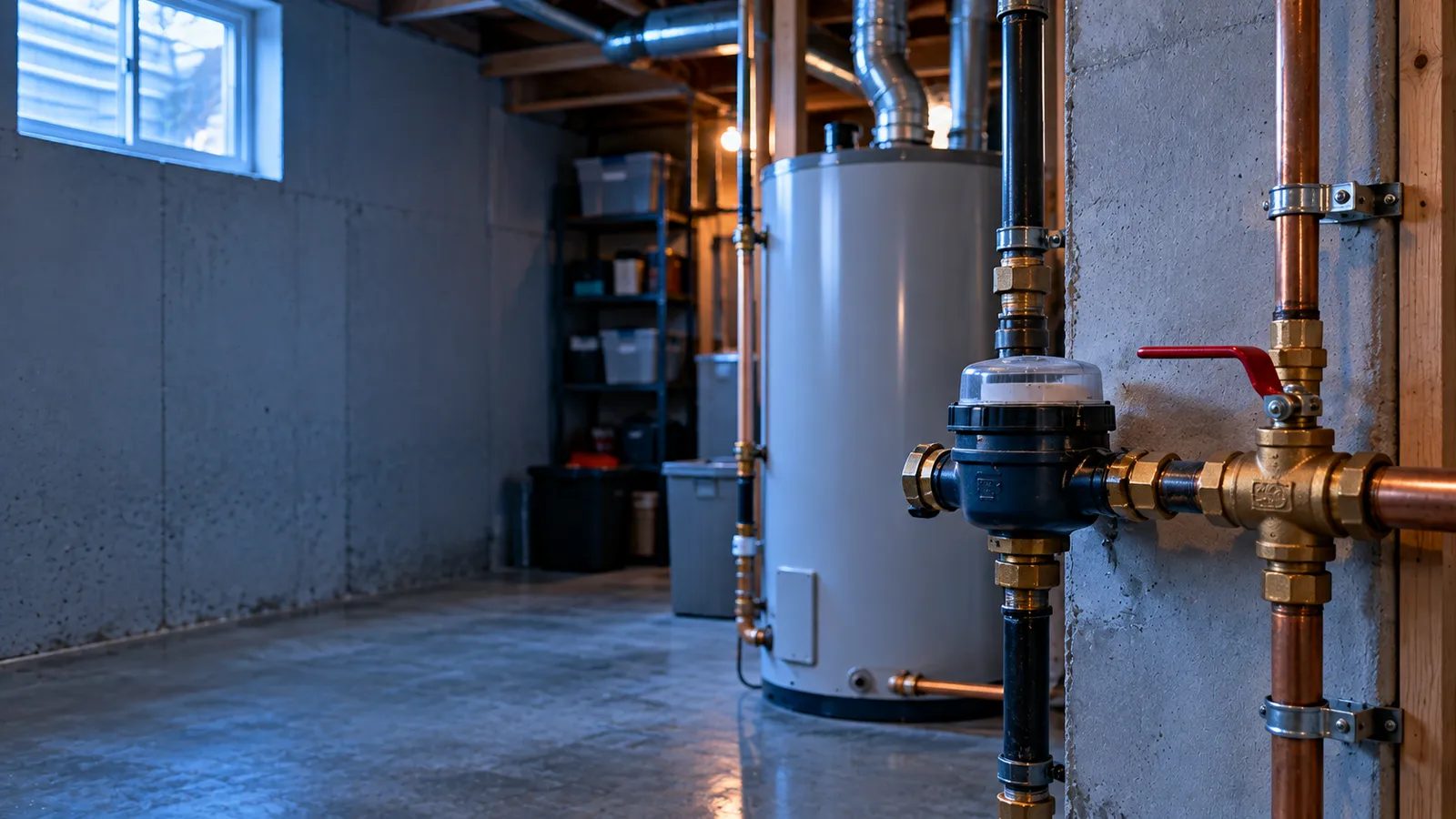
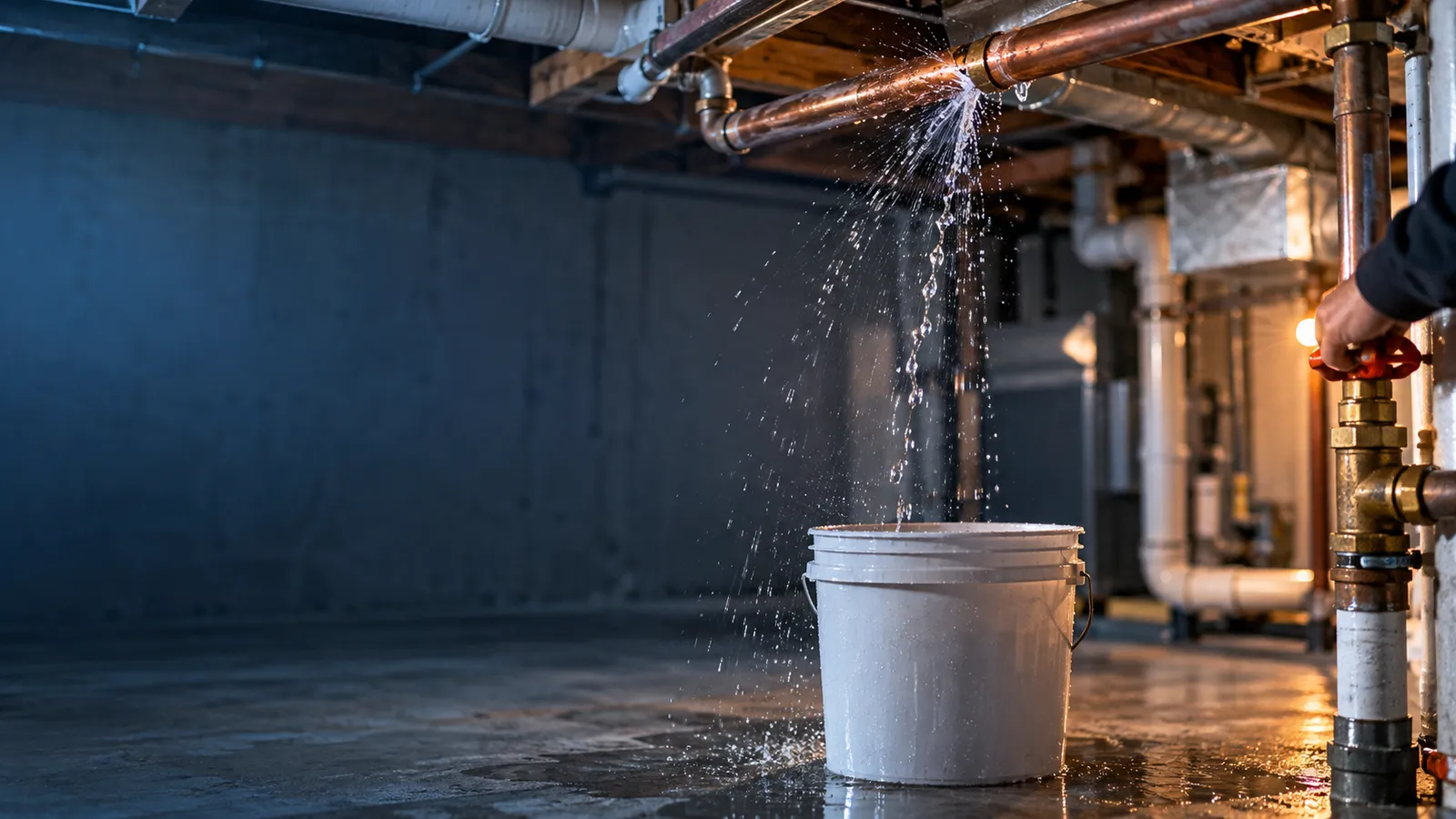
When a pipe bursts in your house, turn off the main water valve first, then deal with electrical safety, and then call a licensed plumber. The City of Calgary tells owners with a flooding home or basement to turn off the main shut-off valve, which is usually near the water meter where the line enters the house, typically in the basement.
- Water first: shut off the main valve.
- Power second, only if it is dry and safe to reach the panel. If water is above the outlets, call 911 and stay out.
- Gas smell: leave immediately and call from outside.
- Then call a plumber, tell your insurer, and start drying quickly.
- Stop the water first, then let a licensed professional inspect the pipe.
In this article
- What should you do first when a pipe bursts?
- What are the steps for the first 15 minutes?
- What if you cannot shut the water off?
- What should you leave to a professional?
- What happens during an emergency plumbing visit?
- What about drying out and your insurer?
- What mistakes make a burst pipe worse?
- Next step
- Frequently asked questions
What should you do first when a pipe bursts?
Think in this order: people, water, power, then repairs. Everyone leaves any area where there is a gas smell or where water covers electrical outlets. The City of Calgary’s home maintenance guide says that if you smell gas indoors, leave immediately without touching lights or appliances, then call ATCO Gas or 911 from outside. The City’s gas-leak page lists the ATCO Gas emergency line as 1-800-511-3447.
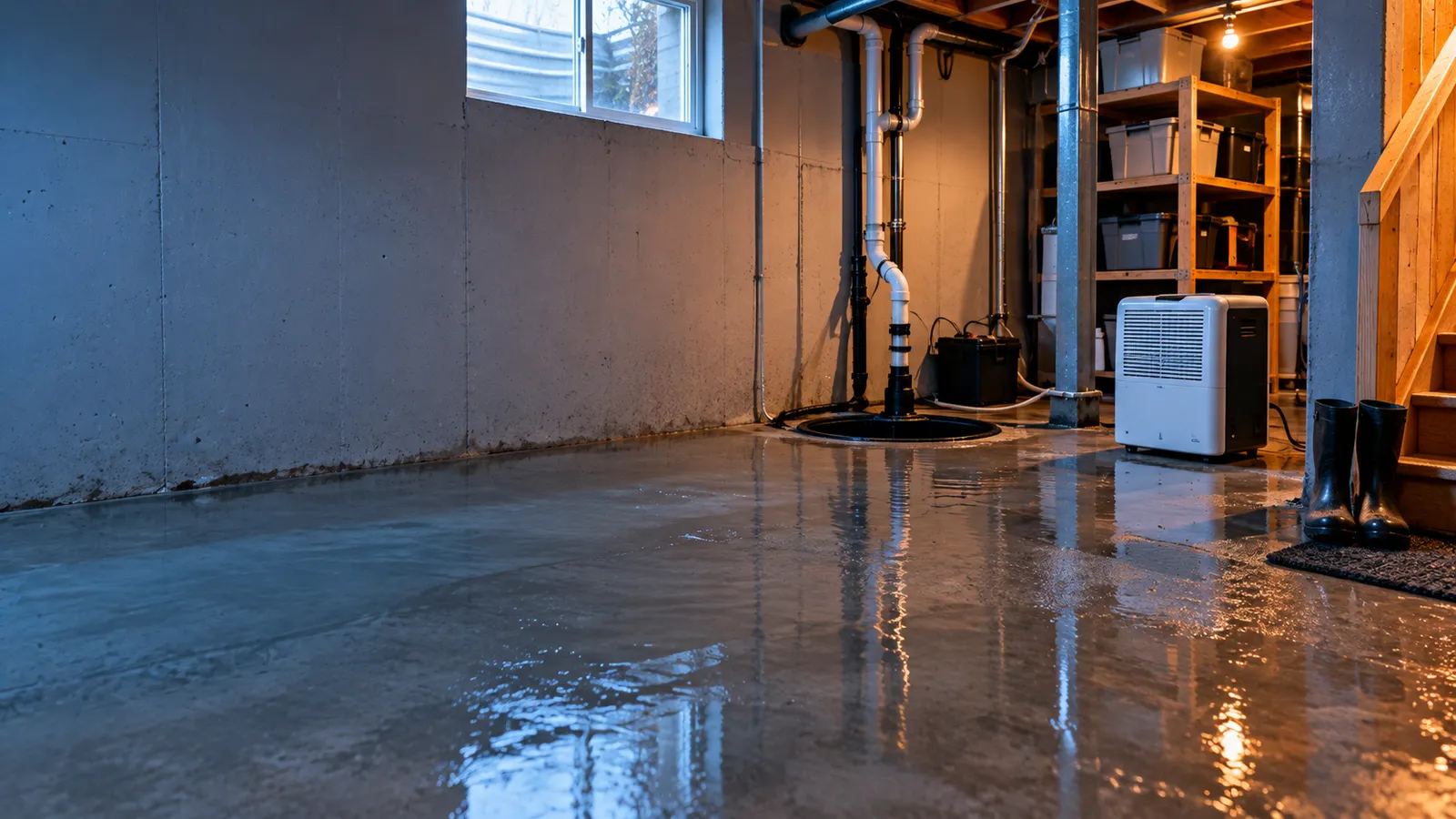
For basement water, the City’s flooding page says to stay out of the basement and that you should call 911 if you smell gas or if the water is above the electrical outlets. If neither applies, you can move to the main valve.
What are the steps for the first 15 minutes?
The time frame is a guide to priorities, not a promise about how long any repair will take.
- Shut off the main water valve. The City says the valve is usually near the water meter, typically in the basement. Its service-valves page adds that the indoor main is typically near the water tank, often in the basement near the floor, or below the water meter. Turn it fully off. If you live in a condo or townhome, the City says to contact your building owner or manager.
- Keep people away from the water. Water spreading across a floor can reach outlets, cords and appliances. If you must cross a wet floor, do not touch electrical equipment.
- Make the power safe, only if you can do it dry. Health Canada’s flood-cleanup guidance says to shut off power to the flooded area at the breaker box. If the panel is in or near the water, do not go near it. Call 911 if water is above the outlets, and contact ENMAX, as the City advises when electrical systems are affected. The City lists ENMAX at 403-514-6100.
- Limit the damage. Once the water is off and it is safe, move belongings out of the wet area and contain what you can with towels and buckets. Stay out of any area with standing water near live power.
- Take photos of the damage. This is our practical suggestion, not a requirement from any source. Photos help you and your insurer, and you can take them from a dry spot.
- Call a licensed plumber. Describe what happened, where, and whether the main is off. Call +1 (403) 700-4443.
- Contact your insurer. The City advises contacting your insurance company after a sewage backup, and it is sensible to do the same after any water loss. Ask what your policy covers before you start repairs.
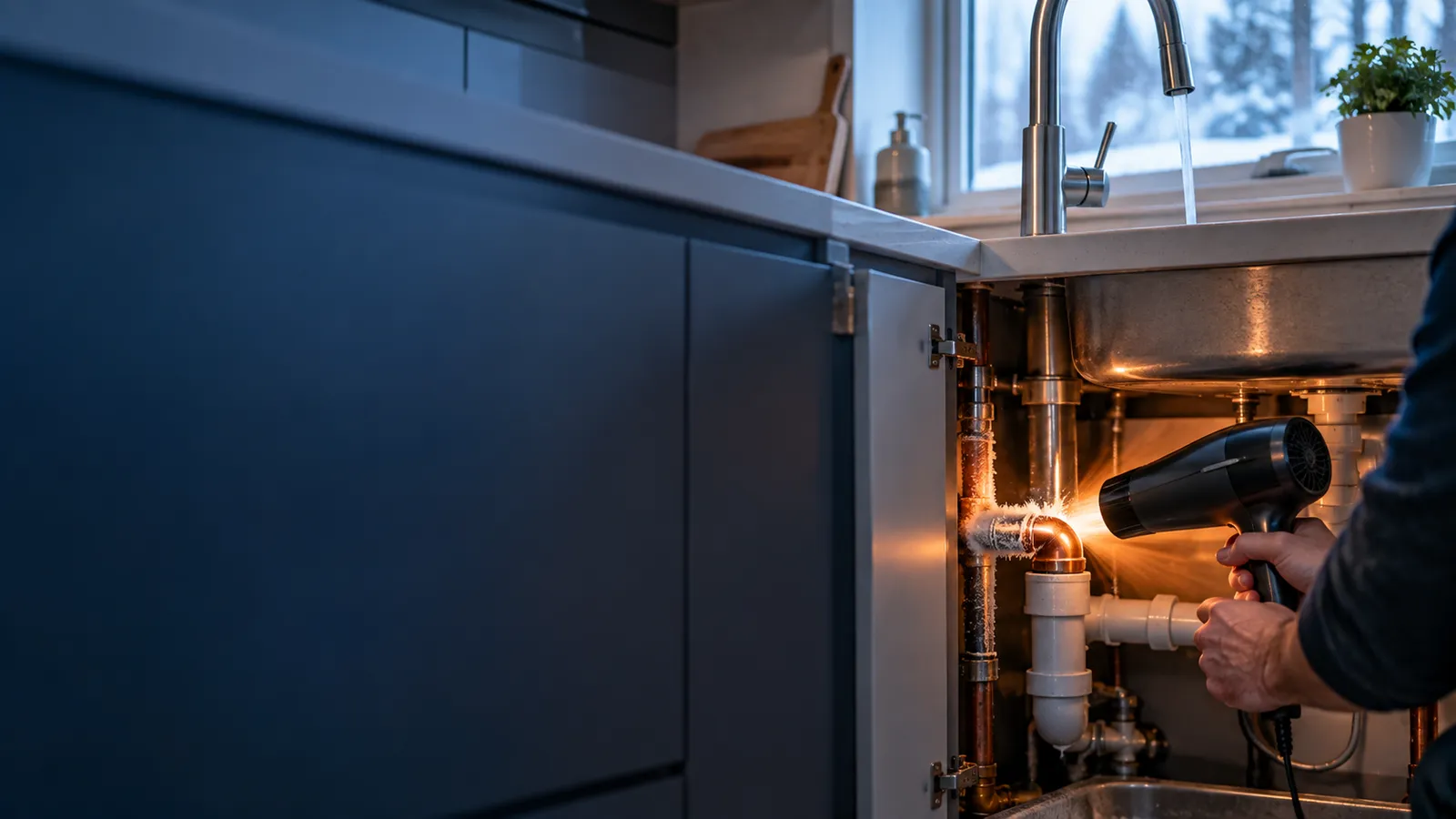
If the burst follows a cold spell, the pipe may have been damaged before you noticed. A fire department in St. John’s notes that freezing can cause unseen cracks in pipes or joints. Our guide on how to thaw frozen pipes safely explains why a frozen pipe needs careful handling, and our list of ways to prevent frozen pipes helps you avoid the next one.
What if you cannot shut the water off?
Not every valve turns. Mineral deposits and grit can make an old valve hard to move. EPCOR, the Edmonton utility, notes that mineral deposits and grit can clog the valve and make it hard to turn, and suggests hiring a professional plumber. Do not force it with tools or a pipe wrench.
In Calgary, the outdoor service valve is owned and operated by the City. Do not try to operate it yourself. The City says its 311 line deals with valve problems, and that an indoor valve repair needs a certified plumber to have the City shut off the water at the outdoor valve first. If water is flooding your home and you cannot stop it, call a plumber right away. The City’s frozen-pipe page also lists 311 for a flooding home.
Our guide to finding your main water shut-off valve helps you locate it before an emergency.
What should you leave to a professional?
Some things are not do-it-yourself, even in a hurry:
- Gas lines, venting and gas appliances. Never attempt repairs. The City’s gas page says to leave all fixing to qualified professionals.
- Electrical panels and wiring. A City of Calgary licensed residential electrical contractor should look at electrical problems, per the City’s home maintenance guide.
- The pipe repair itself. A split pipe, failed fitting or damaged line needs a permanent repair. A licensed plumber can do that, and, as our about page puts it, proper permits are pulled when required.
- Water that is dark, smelly or backing up from a drain. That points to sewage, not a supply line. See our guide on what to do when your basement floods and the City’s sewage backup page.
What happens during an emergency plumbing visit?
Our plumbing page describes three steps. Book: you call or request a quote online and tell us what is going on, and urgent issues are routed for faster response. Diagnose: we inspect the problem, explain our findings in plain language, and outline repair or replacement options. Quote and Complete: you approve a written quote before work starts, and we complete the job to Alberta code and test everything before we leave. All of this is described on our plumbing services in Calgary page.
Among the services listed there are burst pipe repair and emergency plumbing, water line installation and repair, and basement flooding solutions. H2O Expert Plumbing is available 7 days a week. We cannot give you an arrival time in a blog post, because it depends on the day, the weather and where you are, so call and ask.
What about drying out and your insurer?
Water damage gets worse the longer materials stay wet. Health Canada says your house and furnishings are less likely to grow mould if they are dried within 48 hours, and recommends ventilating or using a dehumidifier. It lists flooring soaked by floodwater, and insulation, drywall and carpets exposed to floodwater that cannot be dried, among the things that may need discarding. If sewage is involved, contact your local public health department.
On insurance, the Insurance Bureau of Canada says home policies typically cover sudden or accidental water damage from indoor plumbing, while sewer and drain backup is usually excluded unless you add the option. Your own policy decides what applies, so call your insurer. We are plumbers, not insurance advisers, and we do not tell you what your policy covers.
If the leak is on the private part of the service line outside your house, the City says to call 311. The owner must hire a contractor, and the City says repairs must be made within 15 days or it may issue a remedial order.
What mistakes make a burst pipe worse?
A few errors turn a bad afternoon into a worse one:
- Walking through water to reach the panel or an appliance. The City says to call 911 if the water is above the electrical outlets. Do not take the risk.
- Forcing a stuck valve. EPCOR notes that mineral deposits and grit can make a valve hard to turn, and suggests a plumber. A broken valve makes the emergency larger.
- Operating the City’s valve. The outdoor service valve is the City’s, not yours.
- Waiting to dry things out. Health Canada says homes dried within 48 hours are less likely to grow mould, so start moving belongings and airflow as soon as it is safe.
- Assuming the pipe is the only problem. If gas appliances or electrical systems were near the water, the City says to contact ATCO Gas or ENMAX respectively.
Next step
Once the water is off and everyone is safe, the next action is a call. Phone H2O Expert Plumbing on +1 (403) 700-4443, and tell us what happened, where the main valve is, and whether it is off. For planned work after the emergency, such as replacing older piping, you can request a free quote instead.
Frequently asked questions
What is the first thing to do when a pipe bursts?
Shut off the main water valve. The City of Calgary says to turn off the main shut-off valve when your home or basement is flooding. It is usually near the water meter, typically in the basement. If you smell gas, or the water is above the outlets, leave and call 911 first.
Should I turn off the power when a pipe bursts?
Only if the area is dry and safe to reach. Health Canada says to shut off power to a flooded area at the breaker box. If water is above the outlets, the City says to call 911. Do not stand in water to reach a panel, and contact ENMAX if electrical systems are affected.
Who do I call for a burst pipe in Calgary?
Call a licensed plumber once the water is off. H2O Expert Plumbing is available 7 days a week on +1 (403) 700-4443. If the problem is on the City’s side of the service line, or you cannot reach a valve, the City directs flooding reports to 311.
Does home insurance cover a burst pipe?
The Insurance Bureau of Canada says home policies typically cover sudden or accidental water damage from indoor plumbing, while sewer and drain backup is usually excluded unless added. We cannot tell you what your policy covers. Contact your insurer promptly, and ask before starting repairs.
How fast do I need to dry out after a burst pipe?
Health Canada says your house and furnishings are less likely to grow mould if dried within 48 hours. Ventilate, or use a dehumidifier if weather or speed is a problem. Materials that cannot be dried, such as soaked carpet or drywall, may need to be removed.