When your basement floods, stay out of it, call 911 if you smell gas or the water is above the electrical outlets, and figure out the source of the water before you do anything else. The City of Calgary says that during seepage or flooding you should stay out of the basement. Shut off the main valve if a supply pipe is leaking, and call a licensed plumber for pipes, drains and sump pumps.
- Safety before cleanup: gas smell or water above outlets means 911.
- Find the source: a burst supply pipe, a failed sump pump, a drain or sewer backup, or seepage.
- Sewage is contaminated. Do not enter without protective gear, and call 311.
- Call your insurer early. Sewer backup is usually an optional coverage.
- Dry everything within 48 hours where possible.
In this article
What is the safest first move?
Treat a flooded basement as a hazard before you treat it as a mess. The City of Calgary’s flooding page says to call 911 if you can smell gas or if the water is above the electrical outlets, and to evacuate if needed. It also says to report seepage by calling 311.
Then work through this order:
- Do not go downstairs if water is touching outlets, cords or appliances.
- Look from a dry spot. Is the water clear or dark? Does it smell like sewage?
- If a pipe is leaking, shut off the main valve. The City describes the indoor main as near the water tank or below the water meter. Our guide to finding your main water shut-off valve helps.
- Handle power only if it is safe. Health Canada says to shut off power to the flooded area at the breaker box. Do not reach a panel through water.
- Call for help. Use the right number for the problem, as set out below.
Where is the water coming from?
The fix depends on the source. The City’s home maintenance guide says sewer backups can come from weather overloading, clogs, broken lines, tree roots or sump pump failure. Here is how the common sources break down.
A burst or leaking supply pipe
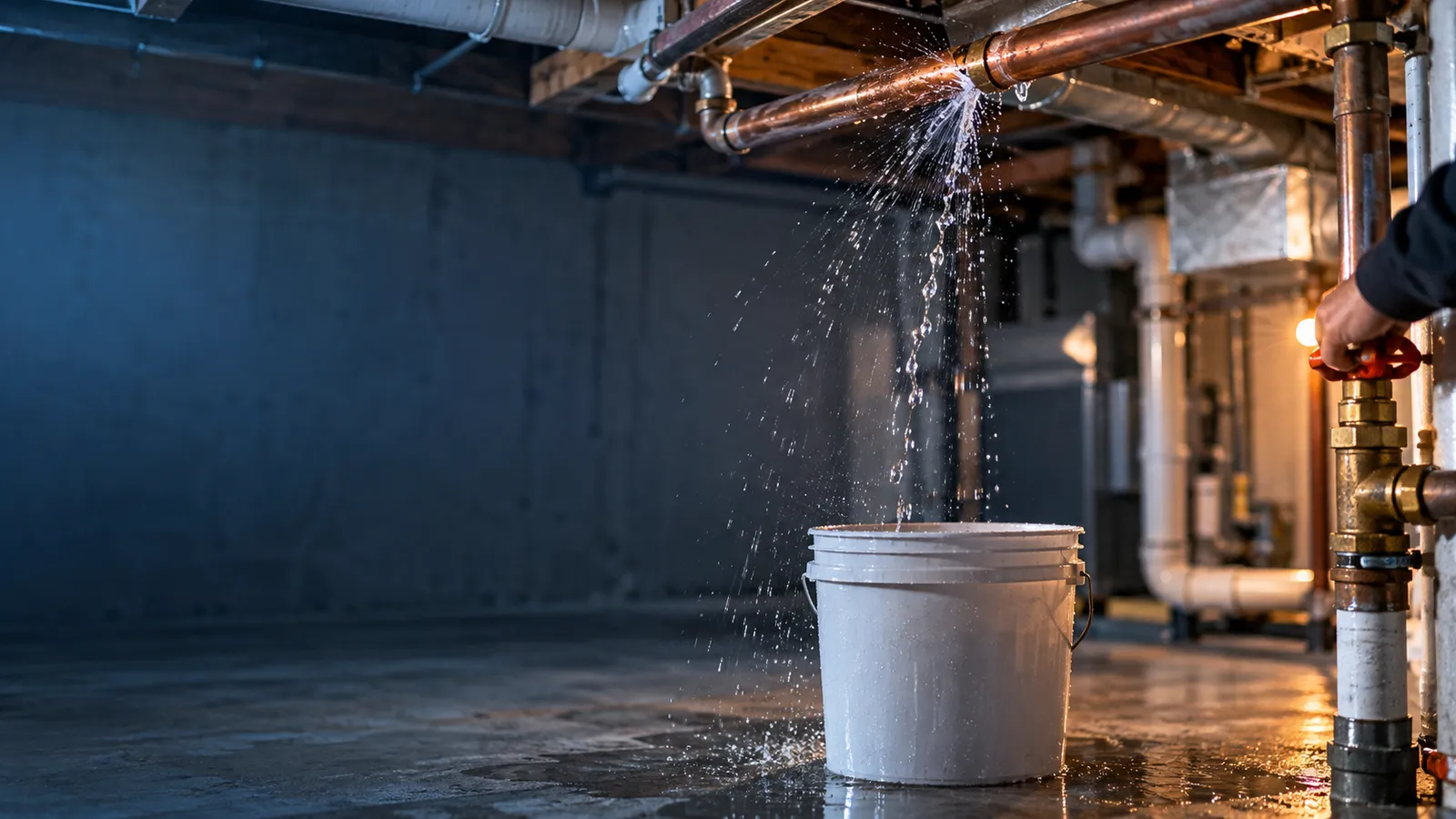
Clear water that keeps coming usually points to a supply line, a fitting or an appliance. Shut off the main valve and call a plumber. Our checklist on what to do when a pipe bursts covers the first steps in detail.
A failed sump pump
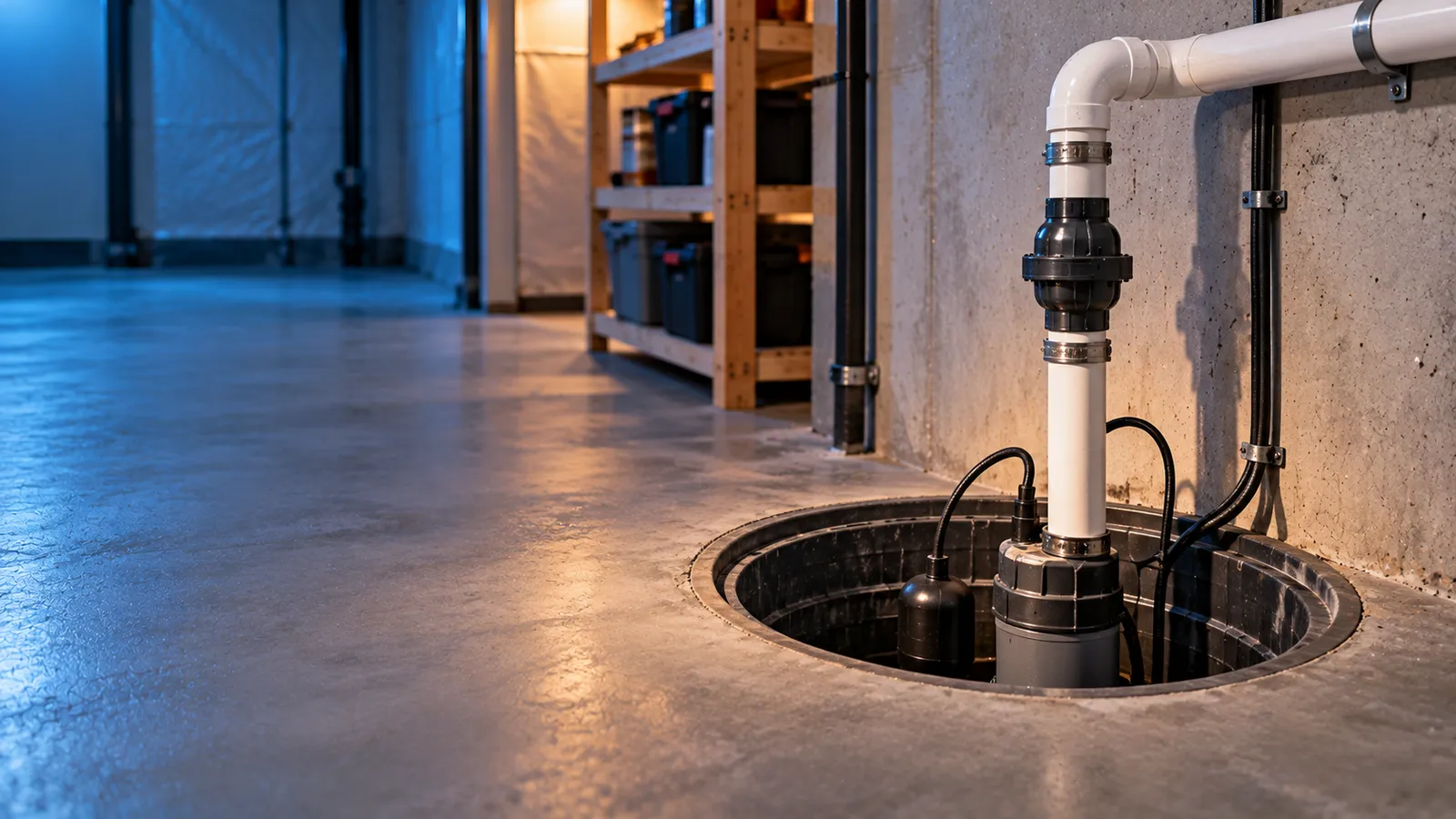
Some homes have a sump pump that moves water away from the foundation. The City says the homeowner maintains it, and that seepage caused by a pump malfunction is also the homeowner’s responsibility. For pump problems, the City says to contact a certified professional such as a plumber. The City does not respond to these calls.
A drain or sewer backup
If wastewater rises through a sink, toilet or drain, treat it as a sewage backup. The City’s sewage backup page says not to enter the area without protective gear such as gloves, boots and a mask, because the water may contain harmful bacteria and pathogens. Its steps are to protect people, call 311, and contact your insurance company. The 311 agent will ask questions to work out whether you need a plumber or whether City infrastructure may be involved.
If 311 says no City inspection is needed, the City says to call a local plumber to check for an internal plumbing problem. If a blockage is on private property, the City crew will advise you to call a plumber.
Seepage or groundwater
Water that seeps in through floors or walls is reported to 311. The City says the City only assesses the flooding situation, does not pump water out of basements, and treats basement flooding as the homeowner’s responsibility.
What should you do about electricity, gas and sewage?
These three hazards cause more injuries than water alone.
Electricity. Health Canada says to shut off power to the flooded area at the breaker box, wear rubber boots whenever you stand in water, and keep extension cords out of the water. The City says to call 911 if water is above the outlets, and to contact ENMAX if electrical systems or appliances are affected. If you cannot reach the panel safely, do not try. The City says to hire a City of Calgary licensed residential electrical contractor for electrical issues.
Gas. If you smell gas indoors, the City says to leave immediately without touching lights or appliances, then call ATCO Gas or 911 from outside. The ATCO Gas emergency line is 1-800-511-3447. If gas appliances are affected, the City says to contact ATCO Gas.
Carbon monoxide. Health Canada warns that CO can build up quickly when gasoline, kerosene or propane pumps or heaters are used in poorly ventilated rooms. Don’t use outdoor combustion equipment indoors, and make sure you have a working CO detector while drying out the house.
Sewage. Health Canada says children, pregnant women and people with respiratory problems should never handle water or materials contaminated by sewage. Wear disposable gloves, an N95 mask and goggles for cleanup, and contact your local public health department if you suspect sewage contamination.
What can a plumber fix, and what is restoration work?
It helps to know who does what, so you call the right people in the right order.
A plumber can find the source of a plumbing problem and fix it. H2O Expert Plumbing’s plumbing services in Calgary page lists basement flooding solutions, sump pump installation and repair, drain cleaning and blockage removal, and water line installation and repair. Its FAQ says we handle basement flooding, including sump pump installation and repair and drain backups.
A restoration company deals with drying, removing damaged materials and rebuilding. We are a plumbing company, not a restoration firm, and our site does not list restoration. Your insurer may be able to suggest cleanup companies. The City says your insurance company can provide a list of recommended basement flooding cleanup companies.
An electrician or gas fitter handles electrical or gas damage. Gas and electrical work needs a licensed tradesperson.
In practice, the order is often: make it safe, stop the source (plumber), dry and clean (restoration), then repair and prevent (plumber and others). If a plumber needs to inspect a leaking pipe or a failed pump, we explain our findings in plain language and you approve a written quote before work starts, as described on that page.
How do you dry out and deal with insurance?
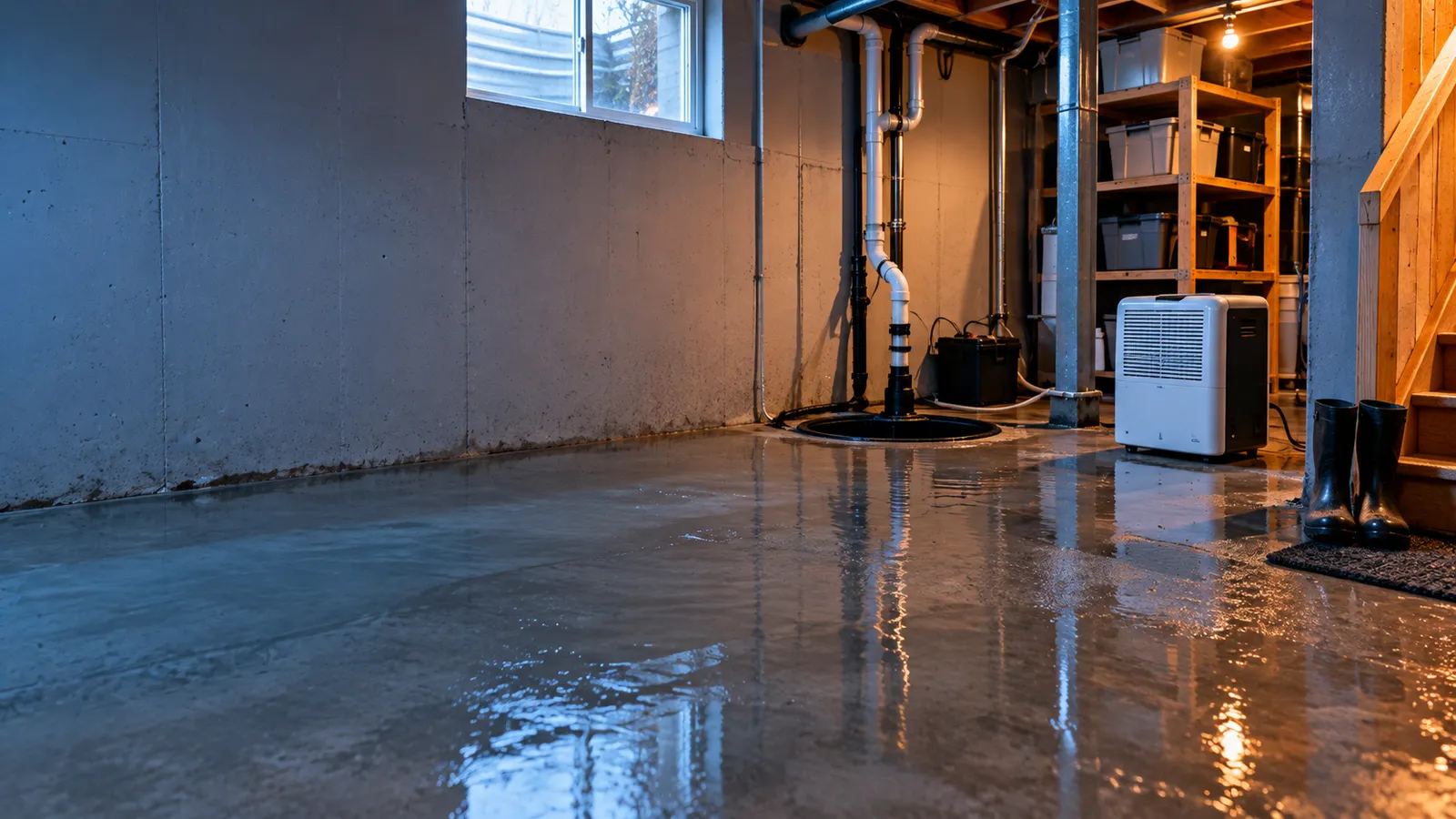
Drying. Health Canada says your house and furnishings are less likely to grow mould if they are dried within 48 hours. It advises ventilating or using a dehumidifier until the house is dry. It lists flooring soaked by floodwater, and insulation, drywall, carpets and particleboard furniture that were exposed to floodwater and cannot be dried, among items that may need to be discarded. Bleach is not necessary for mould cleanup, according to the same page, which suggests an unscented soap or detergent solution.
Insurance. The Insurance Bureau of Canada says home policies typically cover sudden or accidental water damage from indoor plumbing, while sewer and drain backup is usually excluded from standard policies and offered as an option. Overland flooding is typically not covered by a standard policy either. Which cover you have is in your own policy, so contact your insurer promptly, before you throw anything away. Photos of the damage are our practical suggestion.
Reporting to the City. Report seepage to 311. For a sewage backup, 311 is your first call, then your insurer.
How do you lower the chance of a repeat flood?
Prevention is mostly drainage, plus a few devices. The City and the Insurance Bureau of Canada list these steps:
- Direct water away. Point downspouts toward the front or rear of the property, at least six feet from the foundation, per the City. The IBC also says to extend downspouts at least six feet from the basement wall and clean eavestroughs yearly.
- Maintain the sump pump. The City’s climate-ready page says to test it by pouring water into the pit, so the pump starts automatically, to install a check valve on the discharge pipe, and to replace the pump every 10 years or sooner. If it runs often, consider a backup pump and a sump alarm.
- Add backup power. The City suggests a generator or battery system for a backup pump. The IBC lists a sump pump with battery backup. H2O Expert Plumbing’s services page lists sump pump installation and maintenance, with optional battery backup.
- Consider a backwater valve. The City says a backwater valve on the sewer pipe, or on basement showers, toilets and sinks, can help keep sewage out. It requires a plumbing permit, and the City says to hire a qualified plumber and contact its Planning Services Centre to find out whether your home needs one.
- Keep grease and wipes out of drains. The City says fats, oil and grease are the main cause of home sewer blockages.
Whether you need a sump pump at all depends on the house. The City says that if you have no sump pump and no basement moisture problems, you likely don’t need one. Our opinion article on whether you need a sump pump in Calgary goes through it.
Next step
If your basement has flooded, the next action depends on the source. For a leaking pipe, a failed pump or a drain that will not clear, call H2O Expert Plumbing on +1 (403) 700-4443. We are available 7 days a week, and urgent issues are routed for faster response. For planned work such as a sump pump upgrade after the flood, you can request a free quote.
Frequently asked questions
Should I go into my flooded basement?
Not until it is safe. The City of Calgary says to stay out of the basement during flooding or seepage, and to call 911 if you smell gas or if the water is above the electrical outlets. If the water is sewage, the City says not to enter without gloves, boots and a mask.
Who do I call first when my basement floods in Calgary?
It depends on the cause. Call 911 for gas or water above outlets. Call 311 to report seepage or a sewage backup. Call a licensed plumber for a leaking pipe, a failed sump pump or a blocked drain on private property, and contact your insurer promptly.
Does the City of Calgary pump out flooded basements?
No. The City says it only assesses the flooding situation and does not pump water out of basements. Basement flooding is the homeowner’s responsibility, and so is sump pump maintenance. For pump problems, the City says to contact a certified professional such as a plumber.
Does insurance cover a flooded basement?
It depends on your policy and the cause. The Insurance Bureau of Canada says sudden water damage from indoor plumbing is typically covered, but sewer and drain backup is usually excluded unless added, and overland flooding is typically not covered by a standard policy. Ask your insurer before you start repairs.
How quickly do I need to dry a flooded basement?
Health Canada says your house and furnishings are less likely to grow mould if dried within 48 hours. Ventilate or use a dehumidifier until everything is dry. Materials that cannot be dried, such as soaked carpet or drywall, may have to be discarded.