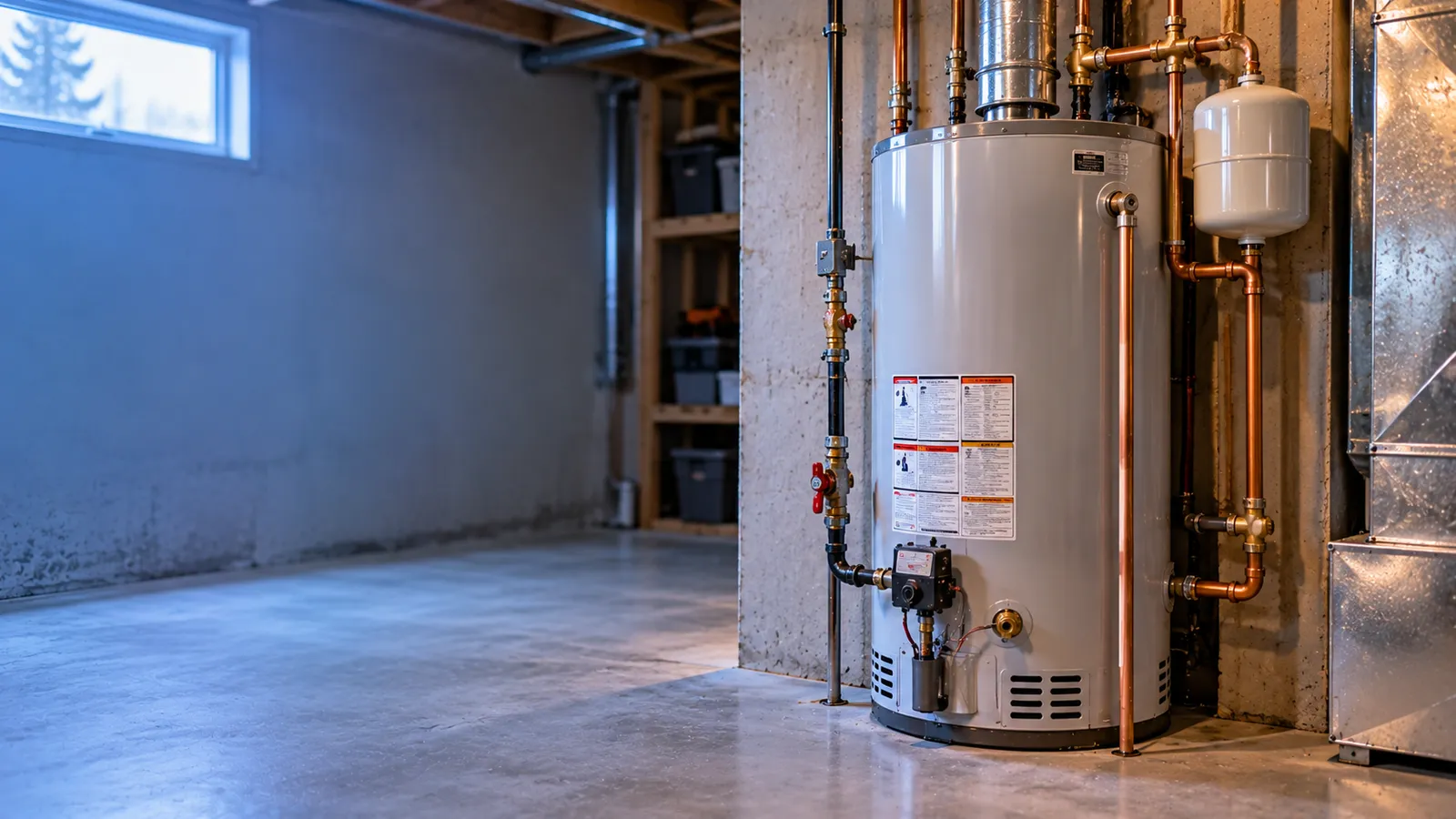
A traditional hot water tank typically lasts about 8 to 12 years, according to a major manufacturer, and a tankless unit can last 15 to 20 years or more with proper care. Our own reference table is in the same range: 10 to 12 years for traditional, 10 to 13 for power vent and 20 or more for tankless. Your tank’s real lifespan depends on how it is built, how hard your water is and whether anyone maintains it.
- Rheem says traditional tanks typically last 8 to 12 years and tankless units 15 to 20+ years.
- Natural Resources Canada says water quality is the single most important factor affecting the life of a water heater. Calgary’s water is hard.
- Age alone is not a failure. Age plus warning signs is a reason to plan a replacement.
- Natural Resources Canada suggests replacing a water heater close to the end of its life but before it fails.
In this article
- How long does each type of hot water tank last?
- Why do tankless units last longer?
- What shortens a hot water tank’s life in Calgary?
- What maintenance actually extends a tank’s life?
- How do you find out how old your hot water tank is?
- Is age alone a reason to replace a hot water tank?
- Should you replace a tank before it fails?
- Next step
- Frequently asked questions
How long does each type of hot water tank last?
Lifespans are ranges, not promises. Here are the figures we could trace to a source, side by side.
| Tank type | Our reference table | Rheem (manufacturer) |
|---|---|---|
| Traditional (conventional storage tank) | 10 to 12 years | 8 to 12 years |
| Power vent | 10 to 13 years | No separate figure given |
| Direct vent | No separate figure given | No separate figure given |
| Tankless | 20 or more years | 15 to 20+ years with proper care |
The first column comes from the “Tank Lifespan Guide” on our hot water tank installation and repair page, which notes that annual flushing helps extend a traditional tank’s life and that tankless units need periodic descaling and proper sizing. The second column is from Rheem’s article on water heater lifespan.
Two things to notice. First, the manufacturer’s range for traditional tanks starts lower than ours. Our reading: treat the overlap, roughly 10 to 12 years, as the zone where a traditional tank deserves a closer look. Second, nobody we read gives a separate lifespan for direct vent tanks, so we are not inventing one. Ask your installer or the manufacturer about your specific model.
Why do tankless units last longer?
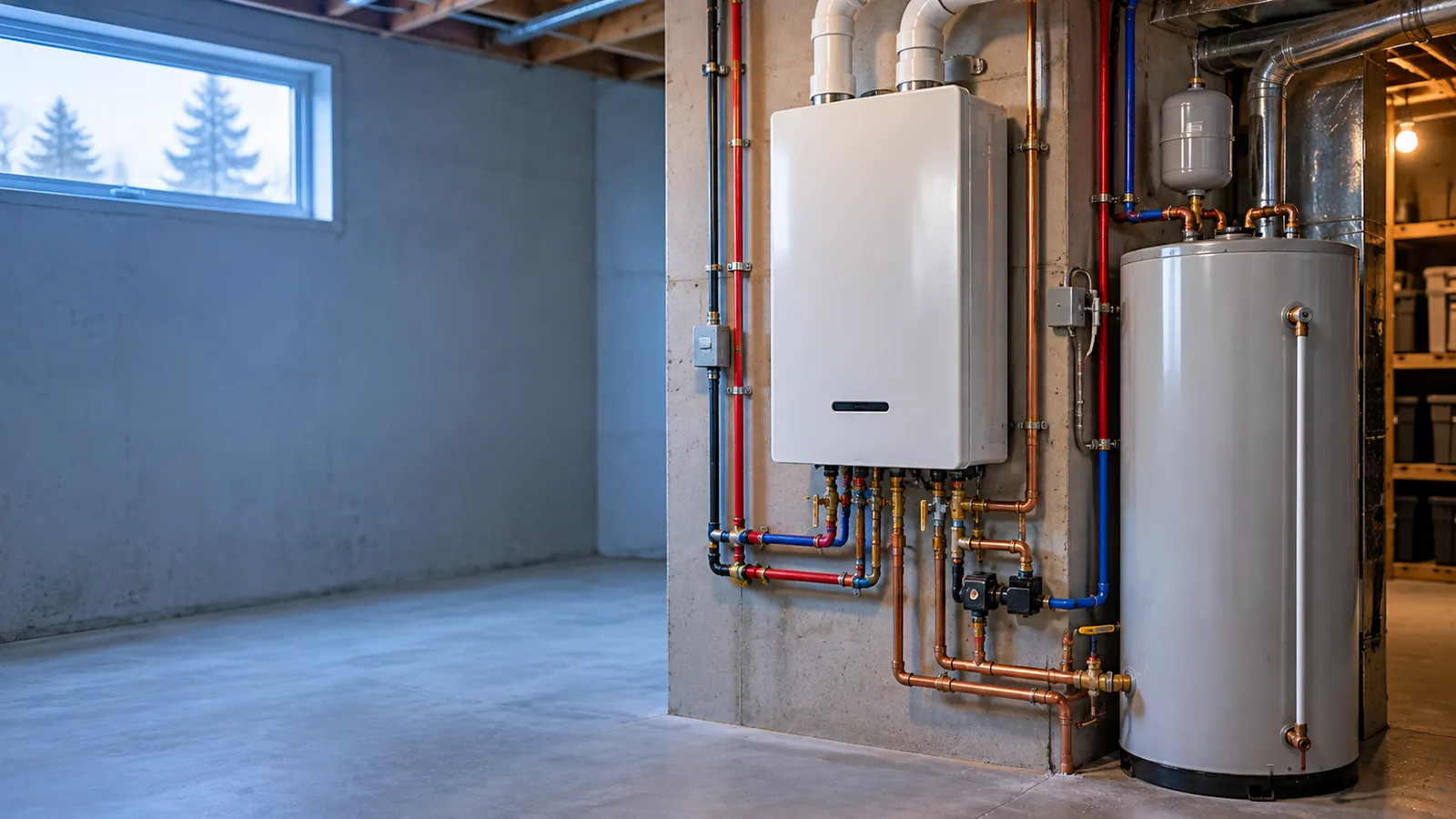
Rheem attributes the difference to how each system works. A tank continuously heats and stores water, which it says puts ongoing stress on internal components. A tankless unit heats water as it flows through the unit.
Natural Resources Canada describes the same basic design difference: a tankless heater has either an electric element or a gas burner that heats flowing water, with no storage tank. Rheem’s maintenance guidance adds that a tankless unit’s weak point is mineral scale building up in the heat exchanger, which brings us to hard water.
A longer lifespan is not the same as a better buy. Tankless units cost more upfront, as our page notes, and have their own maintenance and installation needs. If you are weighing that choice, see tankless vs tank water heaters in Calgary.
What shortens a hot water tank’s life in Calgary?
Water quality, first. Natural Resources Canada’s Water Heater Guide (a 2012 revision) says water quality is the single most important factor affecting the life of the water heater. It also says the rate at which a tank’s protective anode dissolves depends on the mineral content or hardness of the water and on the condition of the coating inside the tank.
The City of Calgary describes our water as hard because of calcium and magnesium from the Bow and Elbow rivers. Its 2025 data show hardness ranging from 141 to 274 mg/L overall, with the Glenmore supply, generally serving the southern half of the city, reading higher than Bearspaw in the north. The City’s page says hard water builds up minerals on taps and fixtures. It does not mention water heaters, so the link between hardness and your tank comes from Natural Resources Canada and Rheem, not from the City.
Rheem lists the other accelerants: hard water, heavy household demand and skipped maintenance all speed up wear. The simplest summary of what hurts a tank:
- Hard water that dissolves the anode faster and leaves mineral deposits.
- Sediment on the tank floor, which Rheem links to rumbling and popping sounds.
- A used-up anode rod, after which the tank starts to rust.
- Heavy daily demand, because the system works harder.
- Skipped flushing and servicing.
What maintenance actually extends a tank’s life?
Rheem’s guidance for tank-type heaters is specific, and it is a good baseline:
- Flush the tank annually. Rheem says removing sediment improves efficiency and extends tank life. For tankless units in hard-water areas it says to plan to flush or descale about every six months.
- Check the anode rod and replace it when worn. Rheem says to replace it every 3 to 4 years, and that a worn rod or one mostly coated with calcium needs replacing. Once it is depleted the tank starts to rust.
- Keep the water pressure in a sensible range. Rheem’s lifespan article says to aim for 40 to 60 psi.
- Have the relief valve checked. Rheem says the temperature and pressure relief valve should release properly and be replaced if it does not or if it keeps leaking afterward.
On the safety side, Natural Resources Canada notes that new water heaters must have a temperature and pressure relief valve, a safety device that lets water escape if it is too hot or under too much pressure.
Rheem is clear about the limits of DIY. It says anode rod and relief valve work is best handled by a qualified plumber, and that some work must be done by a licensed technician to keep a warranty valid. For gas-fired and tankless units, it says gas lines, burners and electrical components are best left to a licensed professional. We agree. Do not attempt gas, venting or electrical work yourself. Natural Resources Canada also notes that adjusting an electric water heater’s temperature is usually harder, and that you may want a qualified service person to make the change. Its scald table shows water at 60 degrees C can scald in under five seconds.
How do you find out how old your hot water tank is?
Start with the rating label on the side of the tank. Rheem says the manufacture date is often encoded in the unit’s serial number. How it is encoded varies by maker, so the reliable route is the manufacturer’s own website, the owner’s manual, or your plumber. We are not going to guess a code format here.
A few honest notes:
- Replacement history matters. If the tank was installed by a previous owner, the label tells you its age, not necessarily when it was installed.
- A missing or illegible label does not mean the tank is old. It means you need a plumber to identify it.
- Do not rely on the house’s age. The tank may have been replaced.
Is age alone a reason to replace a hot water tank?
No. Age is a prompt to pay attention. Rheem says units over 10 years old are more likely to fail again soon after a repair. It suggests repair may make sense for a unit under 6 to 8 years old with no sign of tank corrosion or structural leaks, where repair costs are well below half of replacement. Its rule of thumb is to replace when repair costs exceed 50 percent of a new unit’s price.
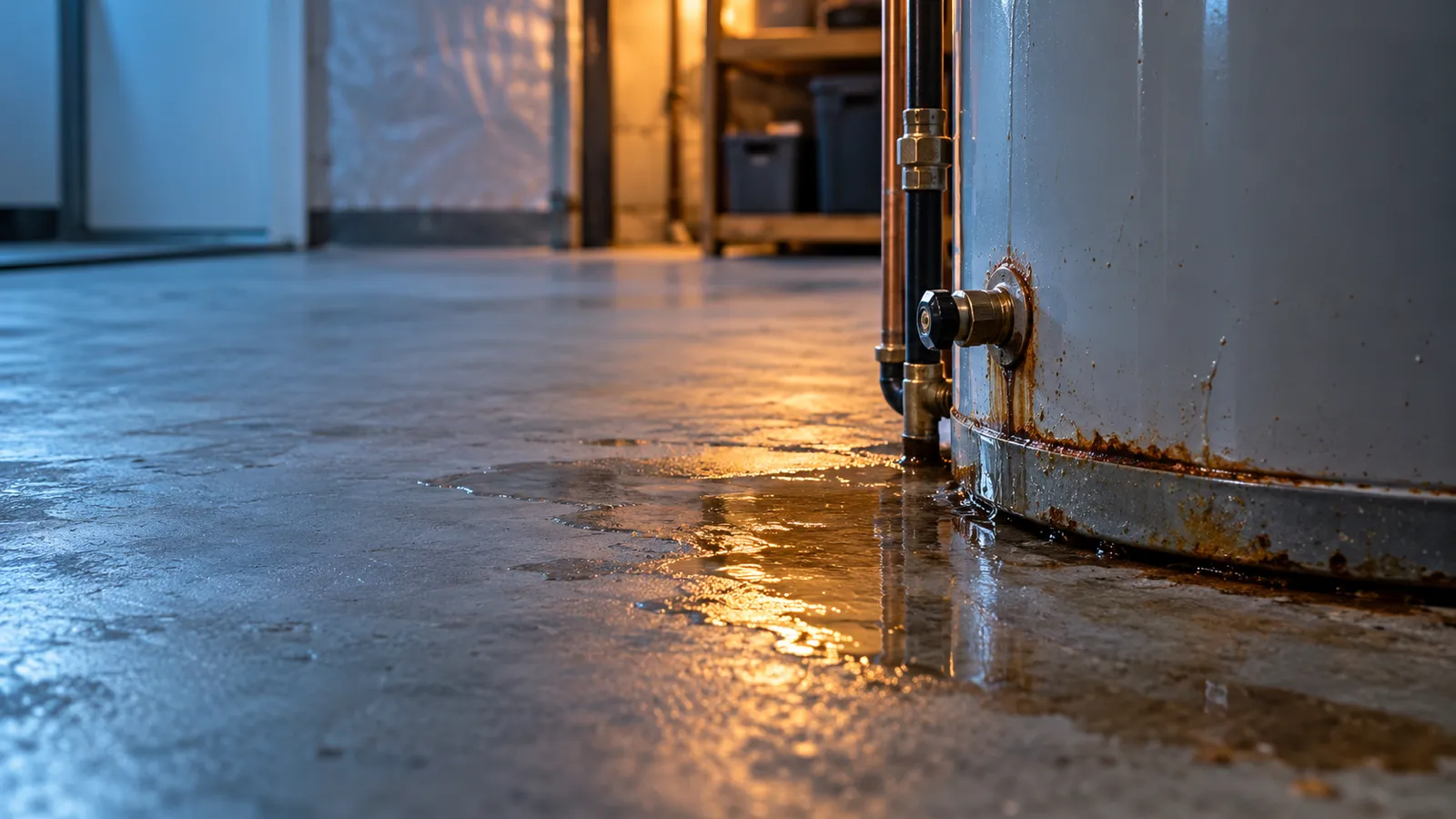
The warning signs matter more than the number. Rheem lists leaking from the base of the tank, rusty or discoloured water, persistent rumbling or popping, and 10 to 15+ years of age with recurring issues. Our page lists no hot water or only lukewarm water, discoloured or rusty water, rumbling or popping, water pooling around the base, and a tank older than 10 to 12 years. The details of each sign, and which ones are urgent, are in 7 signs your hot water tank is failing.
Should you replace a tank before it fails?
Natural Resources Canada’s advice is to consider replacing a water heater close to the end of its life but before it fails, so you can make an informed choice rather than being forced into an emergency replacement. A planned swap also lets you compare types, check sizing and get a written quote.
It also lets you check practical things in advance. The City of Calgary says that in some cases replacing a hot water tank may require a permit, for example when upstream gas lines, the venting system or the type of water heater change. Gas permits must be pulled by a qualified, licensed contractor unless the owner holds a first- or second-class gasfitter certification. Our guide to whether Calgary requires a permit to replace a hot water tank goes into this.
On cost, our hot water tank page says installation in Calgary typically ranges from $900 to $2,000+, depending on tank size, type and installation complexity, with a clear quote before work starts. That is the range as published on our site, and a quote for your home will depend on its details. See how much a hot water tank costs in Calgary for the breakdown.
Next step
If your tank is approaching 10 years, or showing any of the warning signs above, get it looked at before it fails on a cold morning. H2O Expert Plumbing handles hot water tank installation and repair in Calgary across traditional, power vent, direct vent and tankless units, and we are available 7 days a week. You can get a free quote or call +1 (403) 700-4443. See the rest of our plumbing, gas and heating services or about our Calgary team.
Frequently asked questions
How many years does a hot water tank last?
A traditional tank typically lasts about 8 to 12 years according to Rheem, and our reference table gives 10 to 12 years. Power vent units are listed at 10 to 13 years and tankless at 20 or more. These are general ranges, and water quality and maintenance can shift them.
Does hard water shorten the life of a hot water tank?
Natural Resources Canada says water quality is the single most important factor affecting a water heater’s life, and that anode wear depends on water hardness. Calgary’s water is hard, with the City reporting 141 to 274 mg/L in 2025. Regular flushing and anode checks are the usual response. Ask a plumber what suits your home.
How do I find the age of my hot water tank?
Check the rating label on the side of the tank. Rheem says the manufacture date is often encoded in the serial number, but the format varies by manufacturer. Use the maker’s website or owner’s manual to decode it, or ask a plumber. The label shows when the unit was built, not when it was installed.
Is a 12-year-old hot water tank too old?
Not automatically, but it is in the range where tanks are commonly due for replacement. Rheem says units over 10 years old are more likely to fail again soon after a repair. If a 12-year-old tank shows leaks, rust or rumbling, plan a replacement with a licensed plumber rather than waiting for it to fail.
Can I replace a hot water tank myself in Calgary?
The City of Calgary says replacing a hot water tank may need a permit in some cases, and that gas permits must be pulled by a qualified, licensed contractor unless the owner is a first- or second-class gasfitter. Gas, venting and electrical connections are licensed-trade work, so we recommend a licensed professional.
Sources
- Rheem, Water heater lifespan: when to repair vs. replace
- Rheem, How to keep your tank and tankless water heaters running at peak performance
- Natural Resources Canada, Water Heater Guide (revised October 2012)
- Natural Resources Canada, Tankless water heaters (ENERGY STAR)
- City of Calgary, Water quality, hardness and data
- City of Calgary, Homeowner electrical and plumbing permits
- City of Calgary, Carbon monoxide alarms
- City of Calgary, Basement flooding and seepage
- H2O Expert Plumbing, Hot water tank installation and repair (client’s own page)