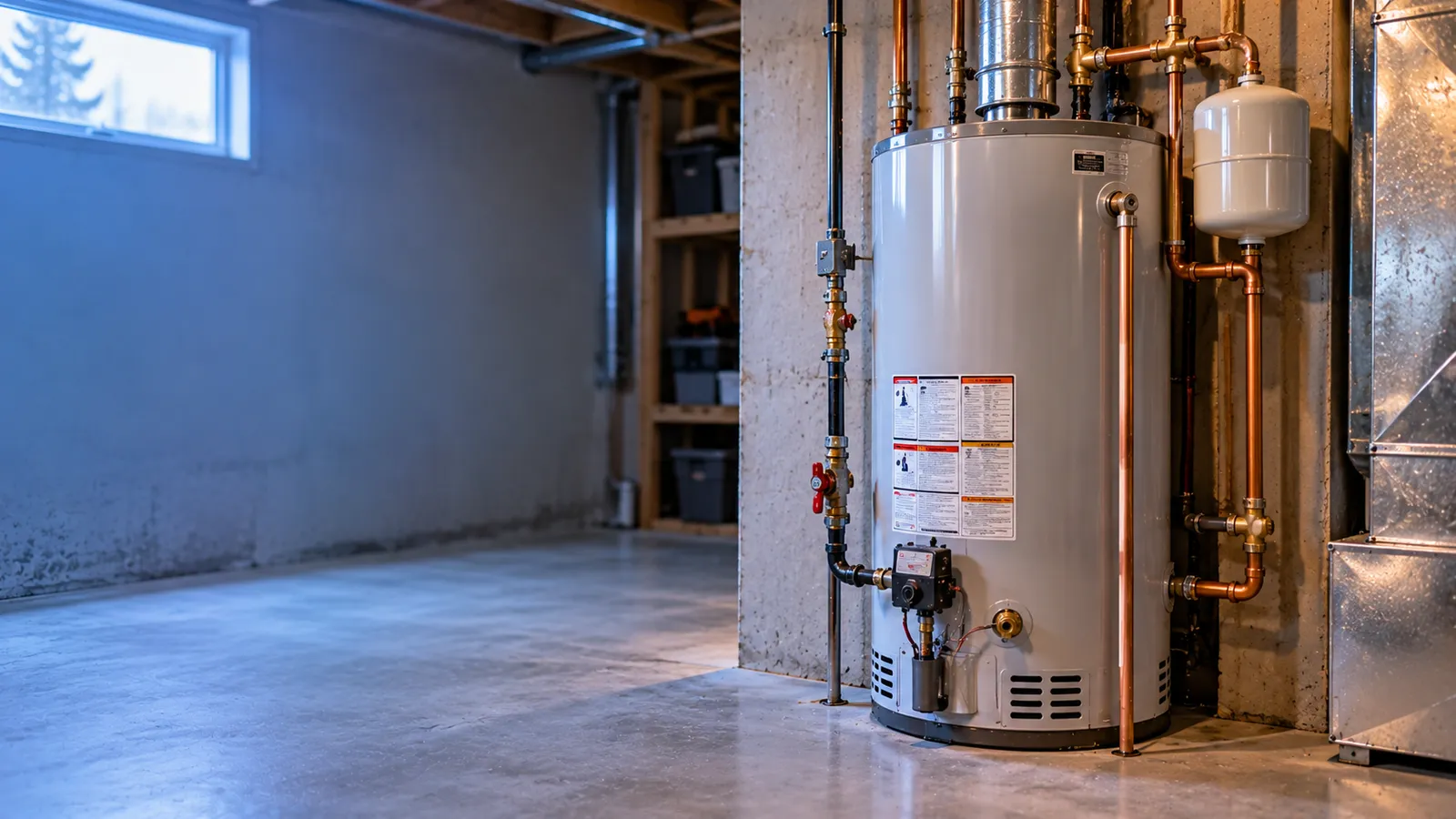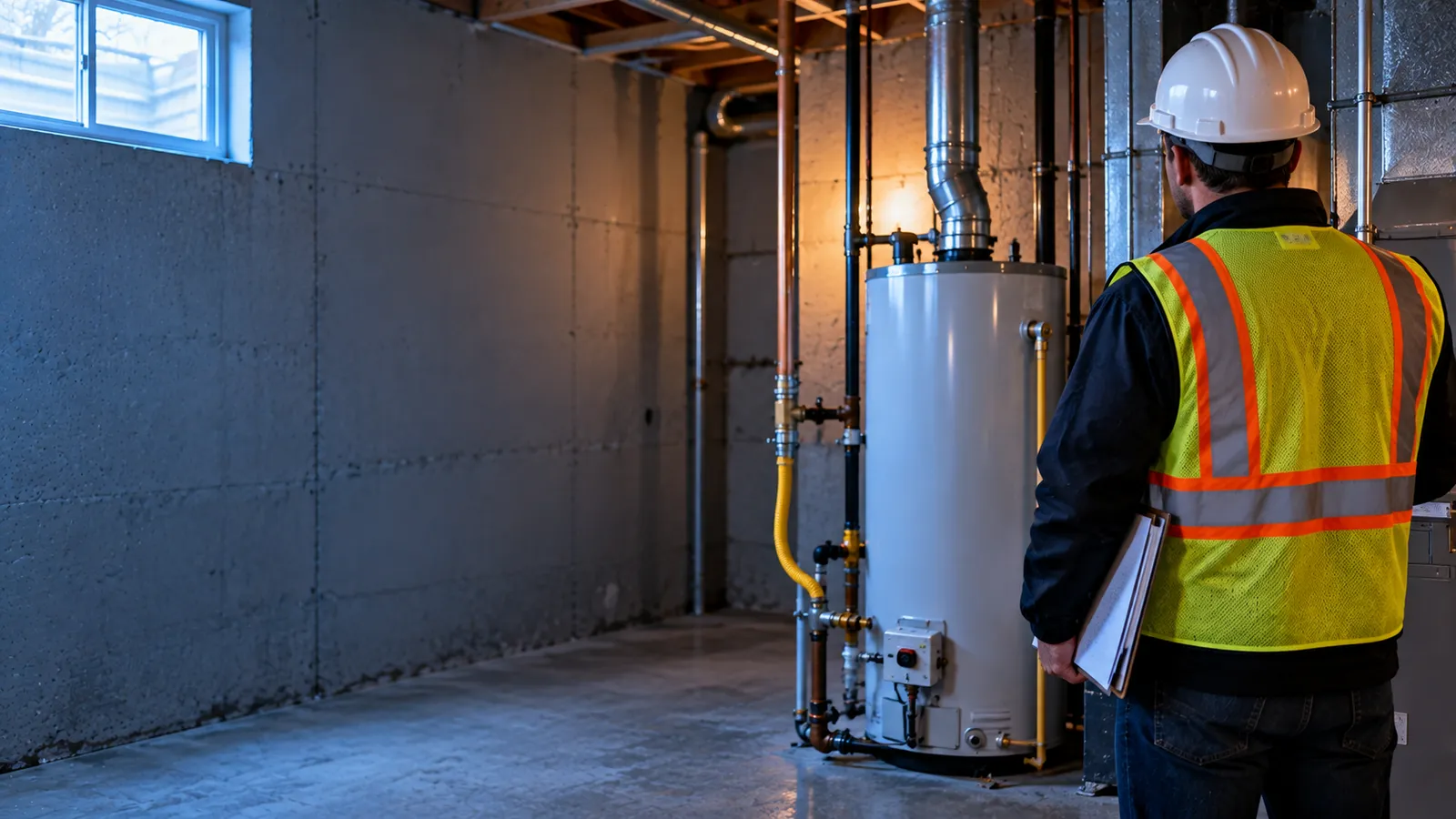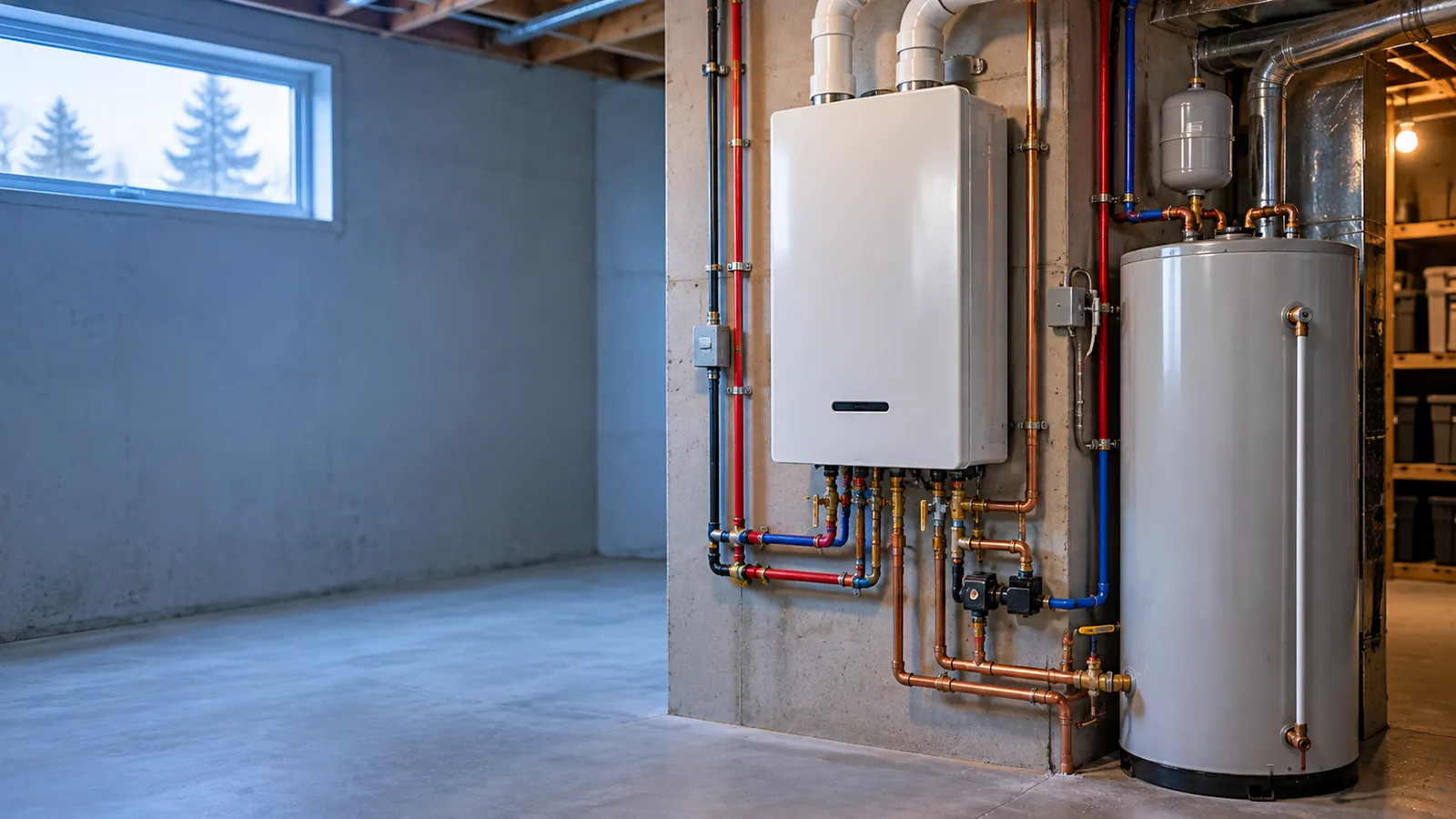
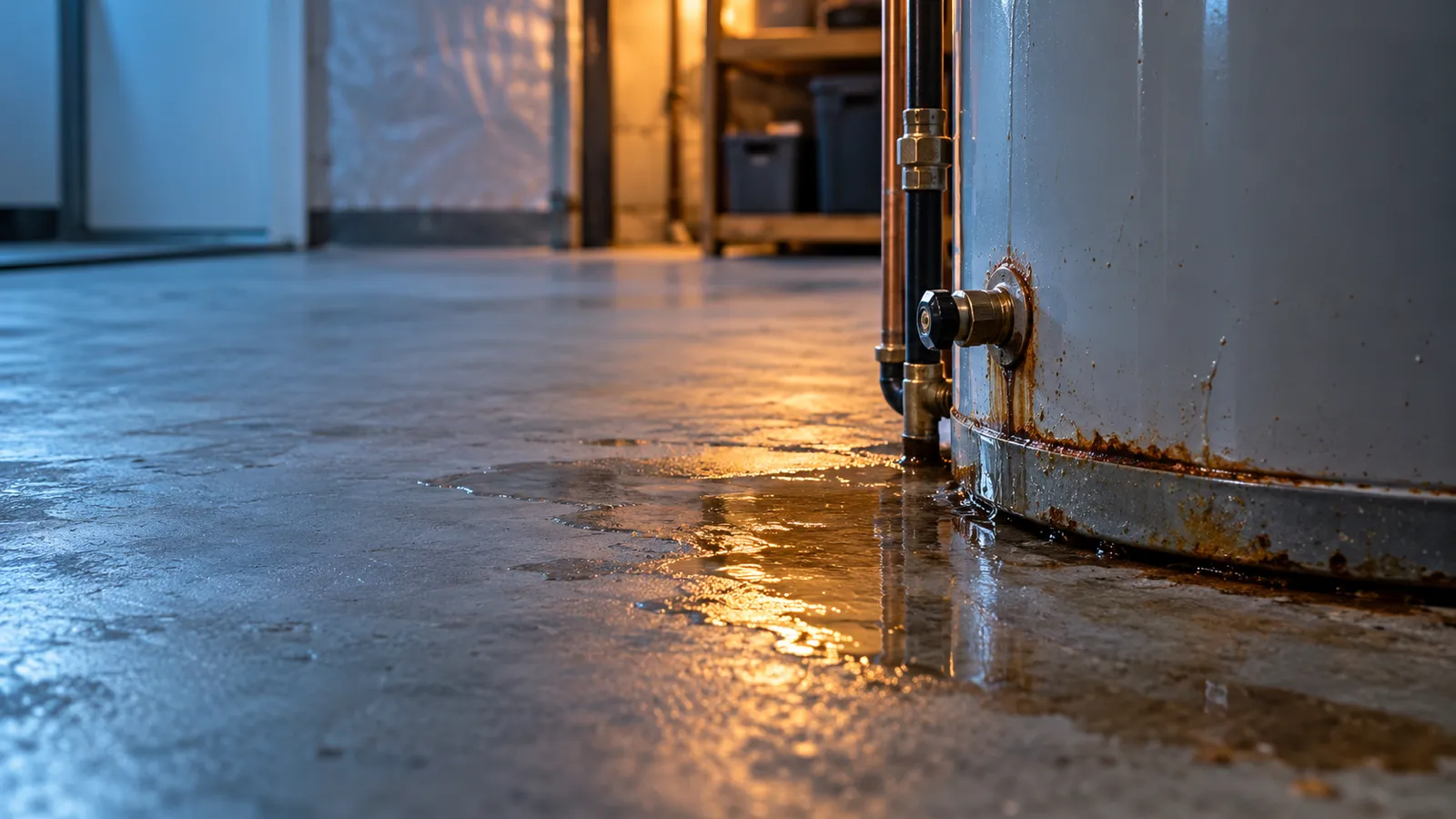
The clearest signs that a hot water tank is failing are water leaking from its base, rusty or discoloured hot water, rumbling or popping noises, little or no hot water, and a tank that is old and needs repeated repairs. Some of these mean “book a visit soon”. Water pooling at the base can mean “act now”. The urgency below is our general guidance, not a diagnosis of your tank.
- Leaks, rust and rumbling are on the warning-sign lists of both Rheem, a water heater manufacturer, and our hot water tank page.
- Rheem says units over 10 years old are more likely to fail again soon after a repair.
- We rank each sign as monitor, book soon or act now, so you can see what matters first.
- Anything involving gas, venting or electricity is a job for a licensed professional.
In this article
- 1. Is there water pooling or dripping around the base of the tank?
- 2. Is your hot water rusty or discoloured?
- 3. Do you hear rumbling or popping from the tank?
- 4. Are you getting no hot water, or only lukewarm water?
- 5. Is your tank older than about 10 to 12 years?
- 6. Is the water smelly, or is the relief valve leaking?
- 7. Are repairs piling up?
- Which signs are urgent? A quick reference
- What happens if you replace the tank?
- Next step
- Frequently asked questions
1. Is there water pooling or dripping around the base of the tank?
Urgency: act now.
Water around the bottom of the tank is the sign we would not wait on. Rheem lists water leaking from the base of the tank as a warning sign, and our own page lists water pooling around the base.
Why it matters: a leak can mean the tank itself has corroded. Rheem explains that once the tank’s protective anode rod is used up, the tank starts to rust. That is a different problem from a leaking fitting or pipe, and a plumber needs to see which one you have.
What to do: Do not guess. Keep clear of standing water near electrical outlets, because the City of Calgary says to call 911 if water is above the outlets. Follow your owner’s manual for shutting off the supply, and call a licensed plumber. If you are not sure where your shut-off valve is, see our guide on finding your main water shut-off valve. The City of Calgary notes that the interior main shut-off valve is typically close to the water tank or below the water meter.
2. Is your hot water rusty or discoloured?
Urgency: book soon.
Rusty or discoloured hot water appears on Rheem’s warning-sign list and on our page. Rheem links the anode rod to this: once the rod is depleted, the tank begins to rust. A plumber can tell you whether the rust is coming from the tank or from elsewhere in the plumbing.
What to do: Book an assessment. A rusty tank is often near the end of its life, so ask the plumber about the tank’s age and condition rather than only the symptom.
3. Do you hear rumbling or popping from the tank?
Urgency: book soon.
Rheem attributes persistent rumbling or popping sounds to hardened sediment on the tank floor. That matters in Calgary, where the City describes the water as hard. Its 2025 data put hardness at 141 to 274 mg/L overall, and Natural Resources Canada says water hardness affects how fast a tank’s protective anode dissolves.
Sediment forces the tank to work harder and can shorten its life. Rheem says flushing removes sediment, improves efficiency and extends tank life, and recommends flushing annually.
What to do: Book a service visit. A plumber can tell you whether flushing is likely to help or whether the tank is too far gone. For flushing and anode work, Rheem says a qualified plumber is the better route.
4. Are you getting no hot water, or only lukewarm water?
Urgency: book soon (act now if you suspect a gas or electrical fault).
No hot water or lukewarm water only is the first item on our page’s warning list. It can have several causes, some minor and some serious, and we cannot tell which from a description. The causes can include gas or electrical components, which are licensed-trade territory.
What to do: Do not open panels or relight pilot lights unless your owner’s manual tells you to and you are comfortable with it. If you smell gas, or a CO alarm sounds, follow the safety box above. Otherwise, call a plumber and describe what you see.
If you rely on a gas-fired tank, remember that the City says most commonly the main source of CO in a home is the furnace and that fuel-burning appliances should be checked by professionals each year. A water heater is also a fuel-burning appliance.
5. Is your tank older than about 10 to 12 years?
Urgency: monitor, then plan.
Age by itself is not a failure. It is a prompt. Our page lists a tank older than 10 to 12 years as a warning sign, and Rheem says traditional tanks typically last 8 to 12 years. Rheem adds that units over 10 years old are more likely to fail again soon after a repair. For the full picture by tank type, see how long a hot water tank lasts.
What to do: Find the manufacture date on the rating label. Rheem says it is often encoded in the serial number, though how it is encoded varies by maker. Note it down. If your tank is in this age range and shows any other sign here, start planning a replacement rather than waiting for a failure. Natural Resources Canada recommends replacing a water heater close to the end of its life but before it fails.
6. Is the water smelly, or is the relief valve leaking?
Urgency: book soon.
Two related signs from manufacturer guidance:
- A rotten-egg smell in hot water. Rheem says this can point to bacterial growth around a magnesium anode rod, and suggests an aluminum or powered anode as a fix. That is a plumber’s call. A rotten-egg smell in hot water is different from a gas smell in the air around your appliances, and you should treat any suspected gas smell as an emergency.
- A relief valve that does not release properly or keeps leaking. Rheem says to replace the temperature and pressure relief valve in that case, and that this work is best handled by a qualified plumber. Natural Resources Canada describes the valve as a safety device that lets water that is too hot or under too much pressure escape from the tank.
What to do: Book a visit and tell the plumber exactly what you noticed. Leave the valve itself to the plumber.
7. Are repairs piling up?
Urgency: monitor, then decide.
Repeated service calls on an aging tank are a sign in themselves. Rheem lists “10 to 15+ years of age with recurring issues” as a warning sign and gives a rule of thumb: replace when repair costs exceed 50 percent of a new unit’s price, and consider replacement after multiple repairs in a short time. Repair may make sense for a unit under 6 to 8 years old with no sign of tank corrosion or structural leaks, where repair costs are well below half the cost of replacement.
What to do: Ask the plumber for a written repair quote and a written replacement quote side by side. Our process is built around that: we inspect, explain what we find in plain language, and give you a written quote before work starts. If the quotes are close, factor in the tank’s age and condition; Rheem notes that older units are more likely to fail again soon after a repair. For the money side, see how much a hot water tank costs in Calgary.
Which signs are urgent? A quick reference
| Sign | Urgency | First move |
|---|---|---|
| Water pooling at the base | Act now | Keep clear of water and electricity, follow your owner’s manual, call a plumber |
| Rusty or discoloured hot water | Book soon | Book an assessment |
| Rumbling or popping | Book soon | Book a service visit |
| No or lukewarm hot water | Book soon (act now if gas or CO suspected) | Call a plumber; leave and call 911 for gas smell or CO alarm |
| Tank older than 10 to 12 years | Monitor, then plan | Find the manufacture date and plan ahead |
| Smell or leaking relief valve | Book soon | Book a visit; do not block the valve |
| Repairs piling up | Monitor, then decide | Compare repair and replacement quotes |
What happens if you replace the tank?
Replacing a tank is not always a like-for-like swap. The City of Calgary says that in some cases replacing a hot water tank may require a permit, and that changes to upstream gas lines, venting or the water heater type are involved. Our guide to whether Calgary requires a permit to replace a hot water tank explains who handles it.
Our hot water tank page lists replacement and new installation for traditional, power vent, direct vent and tankless units, plus tank sizing consultation, and says a standard replacement typically takes 2 to 4 hours.
Next step
If your tank is showing any of these signs, a licensed plumber can tell you whether it is a repair or a replacement. H2O Expert Plumbing is available 7 days a week, and our hot water tank installation and repair in Calgary team works to Alberta code. Get a free quote or call +1 (403) 700-4443. To see the other work we do, browse our plumbing, gas and heating services or learn about our Calgary team.
Frequently asked questions
How do I know if my hot water tank is about to fail?
Common warning signs are water leaking from the base, rusty or discoloured hot water, persistent rumbling or popping, little or no hot water, and a tank over 10 to 12 years old with recurring problems. Manufacturers list these as signs of trouble. One sign alone is not a diagnosis, so have a licensed plumber inspect the tank.
Is a leaking hot water tank an emergency?
Water at the base of a tank deserves quick attention, because it can mean the tank has corroded. Keep clear of standing water near electrical outlets, and follow your owner’s manual for shutting off the supply. The City of Calgary says to call 911 if water is above electrical outlets. Then call a licensed plumber.
What causes a hot water tank to make rumbling or popping noises?
Rheem attributes persistent rumbling or popping to hardened sediment on the tank floor. Calgary’s water is hard, so mineral buildup is a reasonable suspect. Flushing removes sediment, and Rheem recommends annual flushing. Have a qualified plumber check whether flushing will help or whether the tank is too worn to justify it.
Should I repair or replace a failing hot water tank?
Rheem’s rule of thumb is to replace when repair costs exceed 50 percent of a new unit’s price, or after multiple repairs in a short time. Repair may make sense for a unit under 6 to 8 years old with no corrosion or leaks. Ask a plumber for written repair and replacement quotes to compare.
Can I fix a failing hot water tank myself?
Rheem says anode rod and relief valve work is best handled by a qualified plumber, and that gas lines, burners and electrical parts are best left to a licensed professional. DIY work can also affect warranty coverage. If you smell gas or a CO alarm sounds, leave and call 911.
Sources
- Rheem, Water heater lifespan: when to repair vs. replace
- Rheem, How to keep your tank and tankless water heaters running at peak performance
- Natural Resources Canada, Water Heater Guide (revised October 2012)
- City of Calgary, Carbon monoxide alarms
- City of Calgary, Basement flooding and seepage
- City of Calgary, Service valves
- City of Calgary, Water quality, hardness and data
- City of Calgary, Homeowner electrical and plumbing permits
- H2O Expert Plumbing, Hot water tank installation and repair (client’s own page)