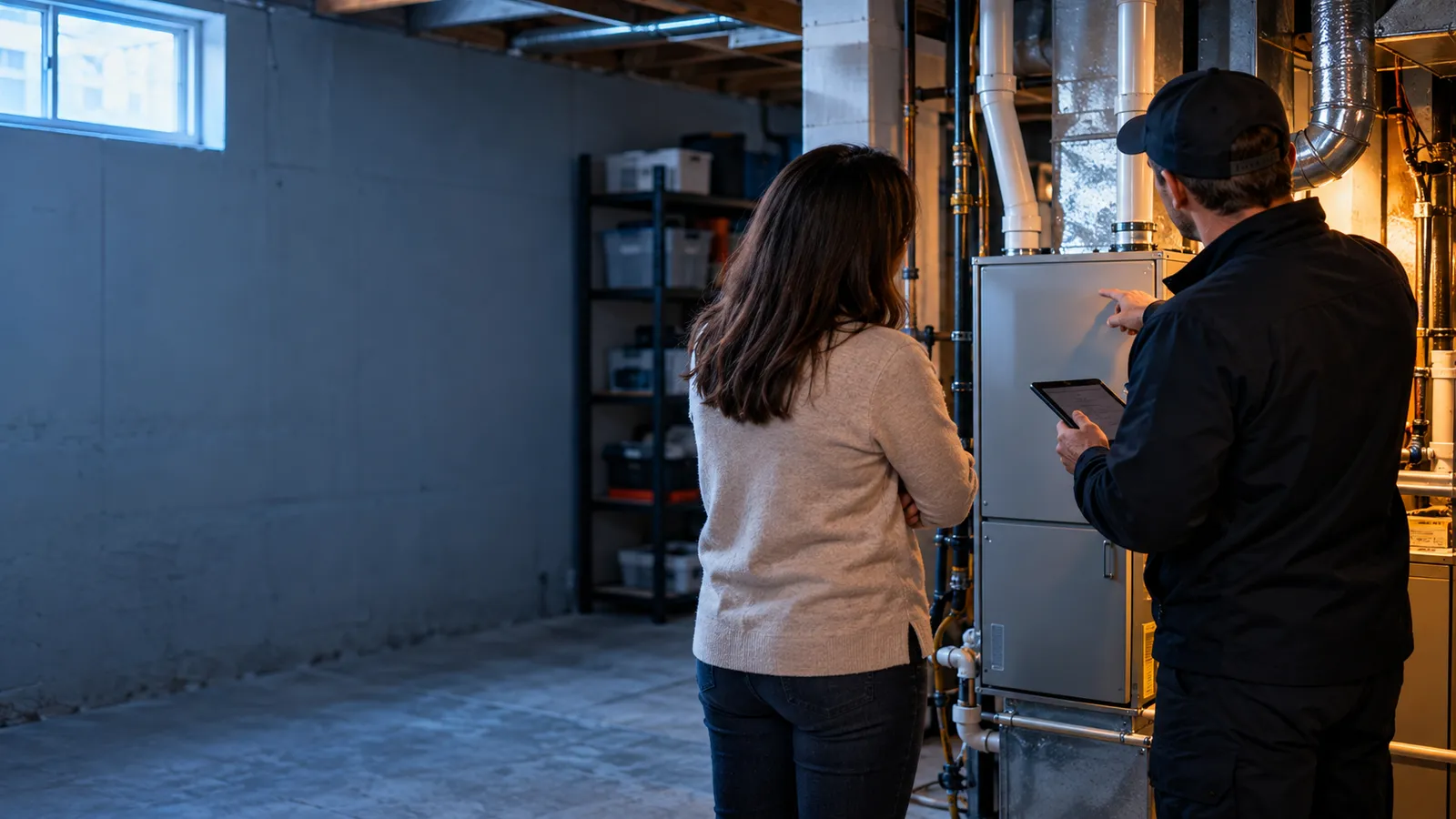
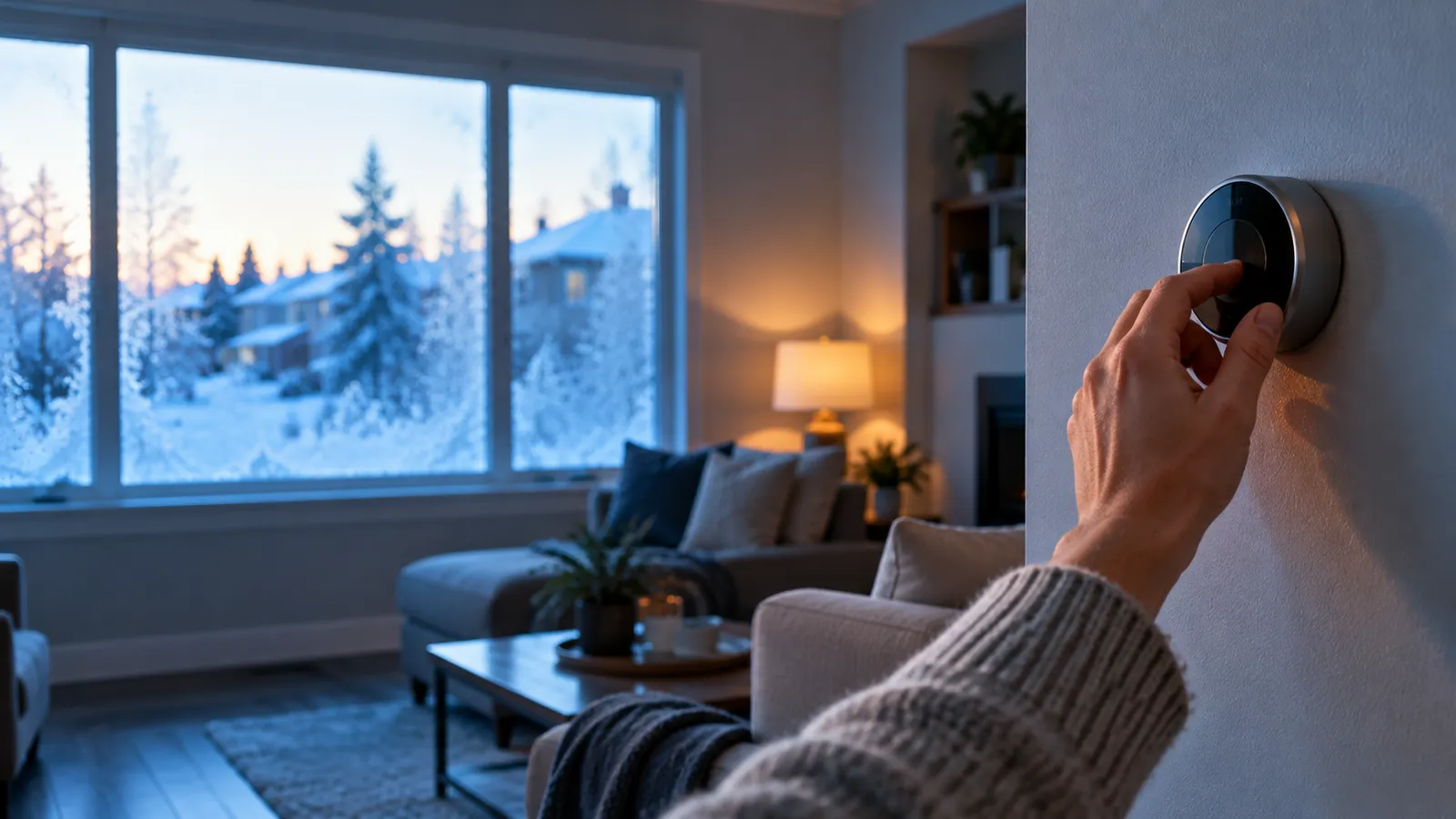
If your furnace is not turning on, what to check first is safety: rule out any gas smell or carbon monoxide alarm, then check six simple things: the thermostat, the furnace power switch, the breaker, the air filter, the vents and registers, and the outdoor vent terminals. Manufacturers such as Trane and Carrier list these same low-risk checks first, and both say to call a professional if the furnace still will not run. This guide puts them in a safe order, with clear points at which to stop.
- Gas smell or a carbon monoxide alarm comes first: leave the house and call for help.
- The usual causes are the thermostat setting, a switched-off furnace, a tripped breaker, a dirty filter and blocked airflow.
- Homeowner checks stop at the thermostat, power switch, breaker, filter, registers and vents.
- Gas valves, ignition parts, safety switches and the burner are for a licensed technician.
In this article
- What should I do first if I smell gas or my CO alarm sounds?
- Why is my furnace not turning on?
- What can I check myself, step by step?
- What should I not try?
- Why do Calgary winters make furnace problems more urgent?
- What will a technician check?
- When should I stop and call a professional?
- What should I tell the technician when I call?
- Your next step
- Frequently asked questions
What should I do first if I smell gas or my CO alarm sounds?
Stop troubleshooting and leave. ATCO’s Natural Gas 101 says natural gas has a harmless added odour similar to rotten eggs so leaks can be detected. If you smell gas or suspect a leak, it says to leave the area immediately, go to a neighbour’s house and call ATCO Gas & Pipelines, 9-1-1 or your local fire department, day or night.
ATCO’s guidance for indoors is specific: do not use matches or lighters, do not smoke, do not use your phone, do not turn light switches on or off, and do not operate electrical switches or appliances. It lists 403-245-7222 as its 24-hour emergency number for Calgary and area.
For carbon monoxide, Health Canada says to leave the home immediately and move to fresh air, not to try to find the source, to call 9-1-1 or the fire department once outside, and to return only after a professional has fixed the problem. ATCO’s CO checklist names a furnace and hot water heater among the sources when natural gas appliances operate improperly, and lists headache, dizziness, fatigue, nausea and vomiting among the signs of exposure.
Why is my furnace not turning on?
The manufacturers’ lists overlap. Trane lists human error, a faulty thermostat, a tripped circuit breaker, airflow problems, gas supply or valve issues and a faulty igniter. Carrier lists clogged air filters, a faulty ignition system and gas supply problems as the common reasons, and also names a broken flame sensor, blocked grilles and, on older models, pilot light issues.
Most of those are either things you can check in a few minutes (settings, power, filter, airflow) or things that need a technician (gas, ignition, sensors). The sections below follow that split.
What can I check myself, step by step?
Work through these in order. Stop at any point where something looks wrong, smells wrong or trips again.
- Check the thermostat. Trane says to confirm it is set to “Heat” and that the room is below the set temperature, then look for an error code on a programmable model and replace batteries in a battery-powered one. Carrier says the same: set to heat and raise the temperature above the room temperature.
- Check the furnace power switch. Trane says to make sure the furnace’s light-switch-style power switch is on. Carrier adds that if it already is, flipping it off and on can reset the system.
- Check the breaker. Both manufacturers say to look at the breaker panel. If it has tripped, reset it once; Trane says that if it trips again you should stop and call a professional, because it points to an electrical issue.
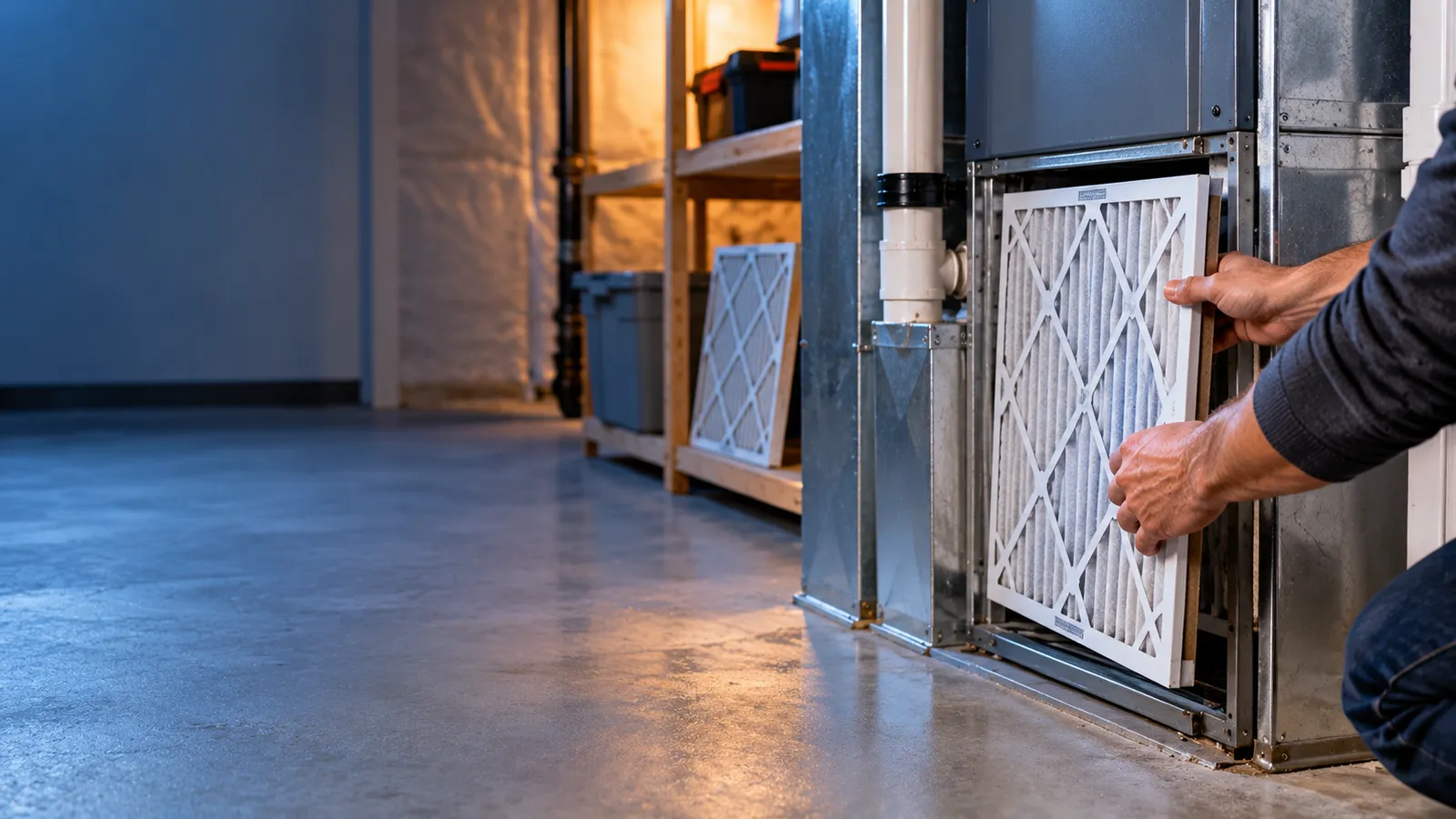
- Check the air filter. A clogged filter can cause the furnace to overheat and shut down automatically, according to Carrier. Natural Resources Canada says to turn off the power to the furnace before you open the access panel to check the filter. Carrier says to check the filter every four weeks, and Trane says to replace filters every 30 to 90 days.
- Check the registers and return vents. Move furniture and drapes away from heat registers and return air vents so air can move freely.
- Check the outdoor vents. Health Canada says to check exhaust vents after snowstorms, and ATCO’s checklist lists clearing indoor and outdoor vents and chimneys of debris, snow and ice. Look at the outside terminals only from the ground, and never climb onto an icy roof.
If the furnace starts after one of these, note which step fixed it. If it fails again the same day, call for service rather than repeating the checks.
What should I not try?
The checks above stop at the filter and the registers for a reason. Newer furnaces have safety sensors and a limit switch that stop operation when they detect a problem, and a furnace that keeps stopping may be telling you something. Do not bypass, jumper or disable a safety device to get heat.
Gas valves, burners, igniters, flame sensors, control boards and venting are licensed-trade work. Trane notes that on older pilot-light models the pilot can sometimes be relit, but this guide does not walk through relighting because it involves gas. If you are not certain how to do it safely under your owner’s manual, do not attempt it, and if a pilot will not stay lit, call a professional.
Why do Calgary winters make furnace problems more urgent?
A furnace that works hard for much of the year has less room for a small problem to sit unnoticed. H2O Expert Plumbing’s about page notes that Calgary homes deal with freeze-thaw cycles and heating systems that “work hard half the year.”
Two cold-weather points matter. Snow and ice can block exhaust vent terminals, which is why Health Canada and ATCO both mention checking them. And a no-heat problem in a cold snap can put pipes at risk, so see our guide on how to prevent frozen pipes in a Calgary winter if the house is cooling down.
What will a technician check?
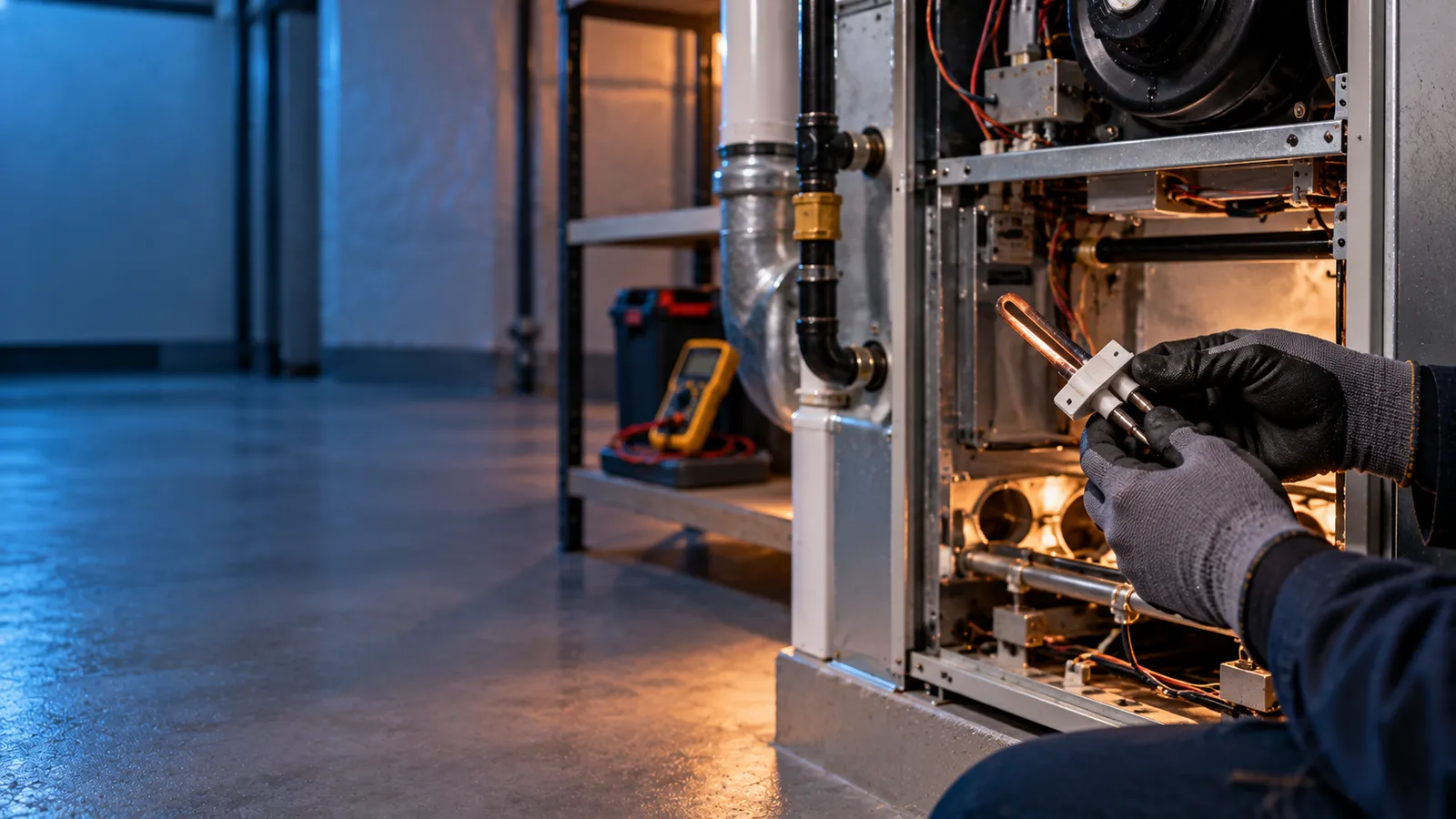
Trane says that on a newer furnace with electronic ignition, a technician will check the control board for error codes. Carrier says a furnace may be locked out because of a fault such as a tripped limit switch, and that failed components can include the motor, circuit board, capacitor or igniter. Neither list means any of those parts has failed in your furnace; a technician diagnoses that on site.
The company’s furnace page lists no heat, ignition failures and airflow issues among the problems it repairs, describes an inspect, quote, repair and test process, and says you receive a clear, upfront quote with no work starting until you approve it.
When should I stop and call a professional?
Call a licensed technician if any of these apply:
- You smell gas, burning or anything unusual (leave the house first).
- A carbon monoxide alarm has sounded (leave first, then call 9-1-1).
- The breaker trips again after one reset.
- The furnace has power, the thermostat is set to heat and the filter is clean, but it still will not run.
- You hear banging, grinding or squealing, which Carrier says may point to worn or damaged parts.
- You see a yellow flame, since ATCO’s checklist says the flame on a natural gas appliance should be blue.
What it costs to fix is a separate question. Our guide to furnace repair costs in Calgary covers the usual repairs, and if your furnace is old and failing often, repair or replace helps you decide. A yearly inspection is the best way to catch problems before a cold night; see how often to service your furnace.
What should I tell the technician when I call?
A few details make the first visit faster. Note what the thermostat was set to, any error code it showed, whether the furnace ran at all and when it last ran, and the date you last changed the filter. Trane says a technician on a newer furnace checks the control board for error codes, so any code you saw at the thermostat or on the furnace is worth writing down.
Also mention anything you smelled or heard, and whether a breaker tripped. If you did need to leave the house because of gas or a CO alarm, say so at the start of the call.
Your next step
If the checks above do not get your furnace running, stop and call a licensed technician rather than trying anything further. H2O Expert Plumbing’s furnace page says to call +1 (403) 700-4443 for priority response in Calgary, or you can request a free quote online. The company is available 7 days a week, and its services list includes furnace tune-up, repair and replacement.
Frequently asked questions
Why is my furnace not turning on even though the thermostat is set to heat?
Check that the room is actually below the set temperature, that the thermostat has working batteries or no error code, that the furnace power switch is on and that the breaker has not tripped. If all of those are fine and the filter is clean, the cause is likely something a technician needs to diagnose, such as ignition, a sensor or the control board.
Why does my furnace click but not start?
Carrier lists several possible causes when a thermostat clicks but the furnace does not start: a tripped breaker, a malfunctioning ignition, a clogged filter, a control board issue or a gas supply problem. Check the breaker and filter, then call a licensed technician for ignition, control or gas issues.
Is it safe to reset the furnace breaker?
Resetting a tripped breaker once is one of the checks Trane and Carrier list. If it trips again, stop. A breaker that trips repeatedly points to an electrical problem, and the manufacturer says to call a professional rather than keep resetting it.
How often should I change my furnace filter?
Follow your furnace manufacturer’s instructions. Trane says to replace filters every 30 to 90 days, Carrier says to check the filter every four weeks, and ATCO’s checklist says to check it monthly. Turn the power off before opening the filter compartment.
What should I do if my furnace won’t turn on and it is very cold?
First rule out gas smell and CO alarms, and run the safe checks above. If the furnace still will not run, call a licensed technician. In the meantime, keep your family warm safely. Health Canada warns that charcoal and gas-powered equipment should never be used indoors, and that kerosene, propane or oil space heaters should not be used in enclosed areas unless designed for indoor use.