How often a furnace should be serviced depends on whose guidance you follow, and Canadian sources are not identical. Health Canada says to have a professional inspect fuel-burning appliances at least once a year or as the manufacturer instructs, while one Natural Resources Canada page says gas furnaces should be serviced at least every two years.
The common thread is your manufacturer’s instructions, plus a licensed technician doing the work before the heating season. Everything else, such as filters and vents, is simple upkeep you can handle yourself.
- Health Canada: a professional inspection at least once a year, or as the manufacturer instructs.
- Natural Resources Canada (NRCan) gives two answers on different pages: annual pre-season check-ups, and at least every two years for gas furnaces.
- Change or clean the filter every three months or when it is loaded, per NRCan.
- Test your carbon monoxide alarms regularly.
- Combustion, gas and venting checks belong to a licensed technician.
In this article
How often should a furnace be serviced?
Here is what each source we read actually says:
| Source | What it says |
|---|---|
| Health Canada | Have a professional inspect fuel-burning appliances “at least once a year or in accordance with the manufacturer’s instructions.” |
| NRCan, guide to maintaining your heating and cooling system | Hire a licensed and insured contractor for annual pre-season check-ups, with the heating check-up in the fall. |
| NRCan, Keeping the Heat In, section 9 | Natural gas and propane furnaces should be serviced at least every two years. Oil-fired furnaces need annual cleaning and tuning. Follow the manufacturer’s recommended procedures. |
Those two NRCan pages do not match, and we have not found anything that reconciles them. We would not read either as a rule for your specific furnace. We read them as a floor (every two years) and a common recommendation (every year).
What does that mean for a Calgary homeowner? Our about page notes that heating systems here work hard for half the year. If you want one simple approach, the most cautious reading is a professional check every year before the heating season, and sooner if the furnace behaves oddly. Check your owner’s manual first, because the manufacturer’s schedule takes precedence in every source above.
If your furnace is already misbehaving, do not wait for the next scheduled service. Our guide to what to check when a furnace will not turn on covers the safe first steps.
When is the best time to service a furnace in Calgary?
Before you need the heat. NRCan’s guide recommends scheduling the heating system check-up in the fall, ahead of the cold weather. That means late summer or early autumn is the natural window, and it is also why October is a sensible time to be reading this.
Do not treat the fall window as a deadline that has passed. If it is already cold and you have not had a check, a mid-winter service still gives a technician the chance to look at the combustion and safety components. The point is to catch a fault before it becomes an emergency at the wrong hour.
What does a furnace tune-up include?
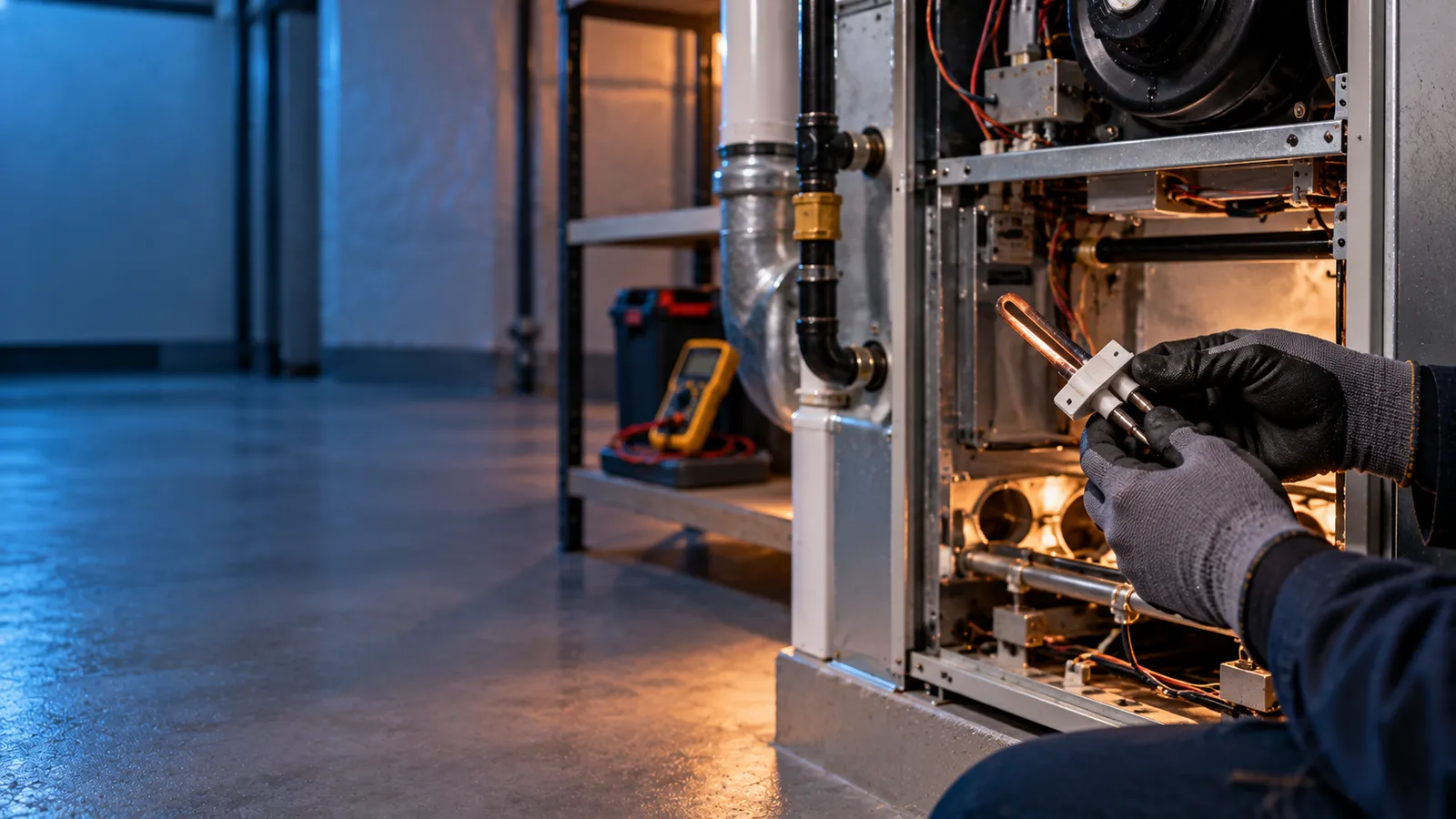
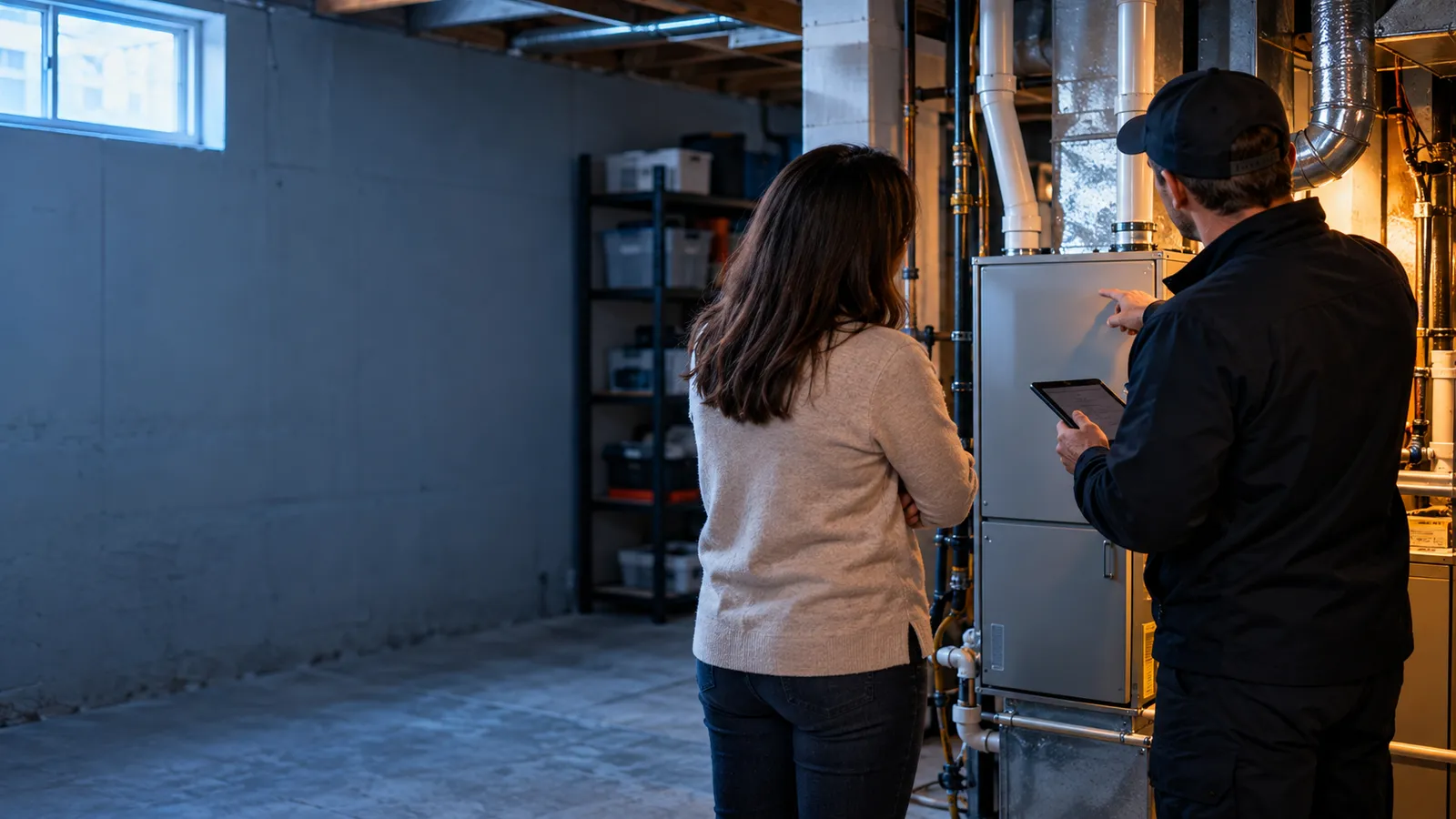
NRCan lists what a contractor should check before winter. According to its maintenance guide, a contractor should:
- check all gas connections, gas pressure, burner combustion and the heat exchanger;
- tighten electrical connections and lubricate moving parts;
- inspect the condensate drain; and
- check all the controls to make sure the system runs safely and properly.
NRCan adds that faults in the gas, combustion and heat exchanger areas can make a system operate less safely and efficiently. That is the main reason this part of the work is not a DIY job.
H2O Expert Plumbing’s furnace page lists maintenance and tune-ups as “scheduled inspections, safety checks, and seasonal maintenance.” Our services page describes an annual plumbing, gas and heating system tune-up in which technicians “inspect, clean, test, and optimize performance.” What a particular tune-up covers can differ between providers, so ask for the checklist before you book.
What can you do yourself between services?
Very little, and that is intentional. The tasks that are safe for most homeowners are about airflow and warning devices.
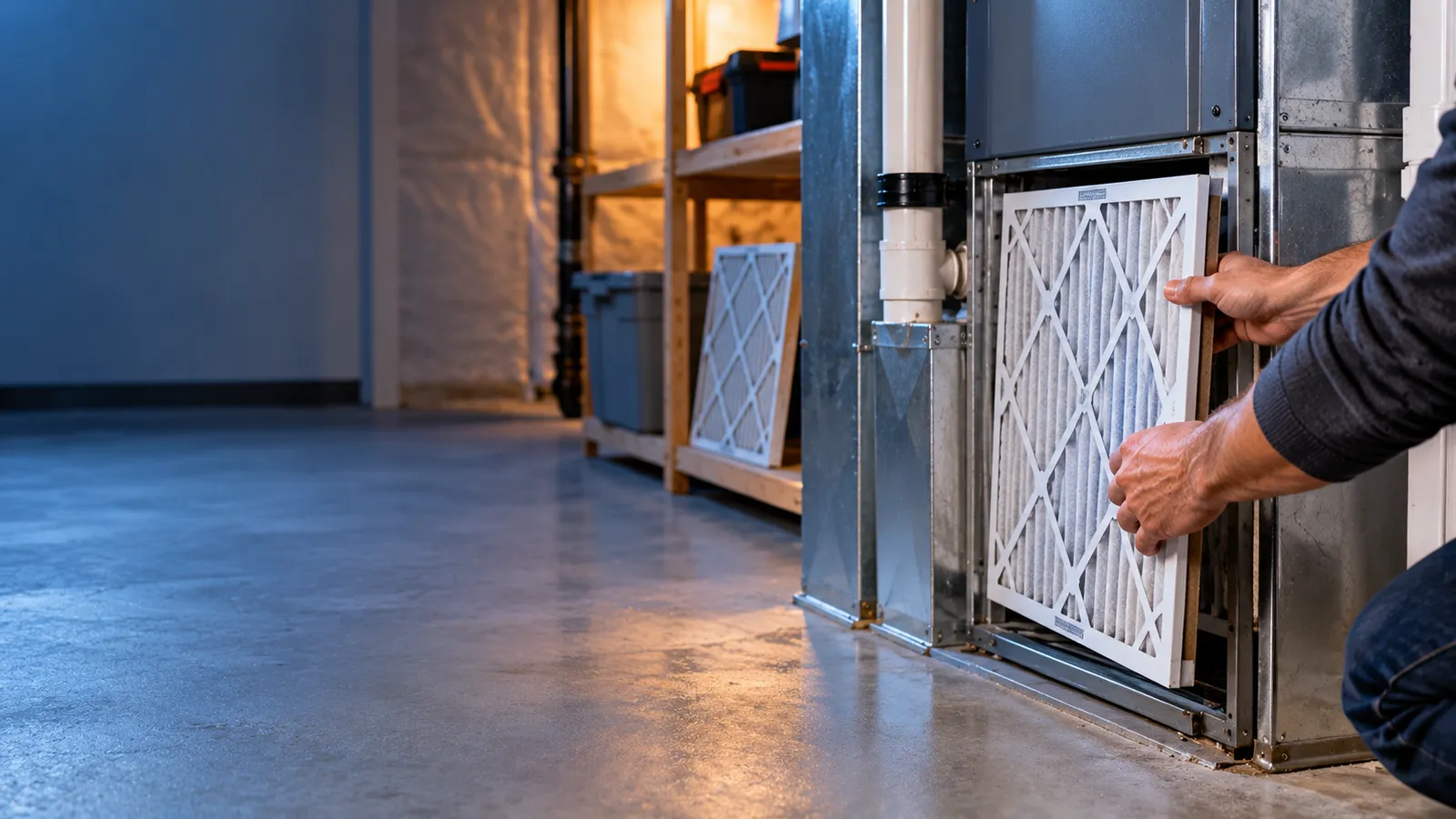
Filters. NRCan says to change or clean forced-air filters every three months or as they become loaded, and to follow your owner’s manual or manufacturer’s guidance for how often. A contractor can also show you how.
Vents and grilles. NRCan advises keeping return-air grilles and warm-air vents clean and free of obstructions.
Exhaust vents outside. Health Canada says to inspect exhaust vents during and after snowstorms to make sure ice, snow or debris has not blocked them. If you see a blockage on a gas appliance’s vent, treat it as a reason to call a professional rather than a job to improvise.
Carbon monoxide alarms. Health Canada says the most important place for an alarm is in hallways outside sleeping areas, and that homes with combustion appliances should have at least one alarm with battery backup. It also says to test alarms regularly and to replace batteries and the alarm itself as the manufacturer recommends, checking the expiry date.
In Alberta, the Alberta Safety Codes Council says the building code requires alarms in new buildings with a fuel-burning appliance or attached garage, and highly recommends them for all existing homes. Its tip sheet is dated January 2020, so confirm current requirements with your local authority.
Does skipping furnace service affect your warranty?
It can, depending on the manufacturer and the wording, so check your own documents. We read one real example, Carrier’s limited warranty for a condensing gas furnace series. It requires installation by a licensed HVAC technician and says “installation, use, care, and maintenance must be normal and in accordance with” the installation instructions, owner’s manual and the company’s service information.
That wording points you back to the owner’s manual rather than naming a service interval, and we did not find an annual-service clause in that document. We cannot say what yours says. Keep your service records anyway, because they show the maintenance was done if a warranty question comes up.
How much does a furnace service cost?
We do not publish a Calgary price for a tune-up, and we did not find a reliable independent Calgary figure, so we will not guess one. For context only, an article in Enbridge’s Sustain knowledge base (Ontario, published October 7, 2026, pricing reviewed August 2026) puts a basic furnace inspection at $100 to $200, a tune-up at $100 to $270 and annual maintenance plans at $100 to $500 a year. It notes the figures can exclude taxes, repairs, parts, filters, travel and emergency fees.
Those are Ontario numbers, so use them only to sanity-check a Calgary quote. Ask what the visit includes, and get the price in writing before work starts. Our guide to furnace repair costs in Calgary explains what happens if the technician finds a repair is needed.
Next step
If you are planning a pre-season check, start by finding your furnace’s model number and owner’s manual, then book a licensed technician. If you are weighing an older furnace, read our guide to repairing or replacing a furnace first.
We handle furnace tune-ups, repairs and replacements across Calgary and nearby communities, and we are available 7 days a week. Get a Free Quote → or call +1 (403) 700-4443.
Frequently asked questions
Should I service my furnace every year or every two years?
Health Canada recommends a professional inspection at least once a year or as the manufacturer instructs. One Natural Resources Canada page says gas furnaces should be serviced at least every two years. The manufacturer’s schedule governs, and annual is the more cautious choice.
Can I service my furnace myself?
Only the basics. Natural Resources Canada says homeowners can inspect, clean or change filters and keep vents and grilles clear. Gas pressure, burner combustion, the heat exchanger and venting need a licensed technician, because mistakes can create carbon monoxide risks.
How often should I change my furnace filter?
Natural Resources Canada says to change or clean forced-air filters every three months or as they become loaded. It also says to follow your owner’s manual or manufacturer’s guidance for how often. Your manual will say what type of filter your furnace takes and how to remove it. If you are unsure, ask a technician to show you.
Do I need a carbon monoxide alarm if I service my furnace?
Yes. The Alberta Safety Codes Council calls alarms the only means of warning occupants about carbon monoxide, and Health Canada says homes with combustion appliances should have at least one alarm with battery backup. Servicing is not a substitute for a working, tested alarm.
Is it too late to service my furnace in winter?
No. NRCan recommends a fall check-up, but a service in winter still lets a licensed technician check combustion and safety components. If the furnace is already failing, do not wait for a scheduled visit. If you smell gas, follow the City of Calgary steps in the safety box above.